Farm, Fresh, Fun
Create a grocery shopping experience based on the incorporation of farm fresh produce into an embodied and enjoyable social interaction between the shopper and local growers and artisans
Observation
Overview
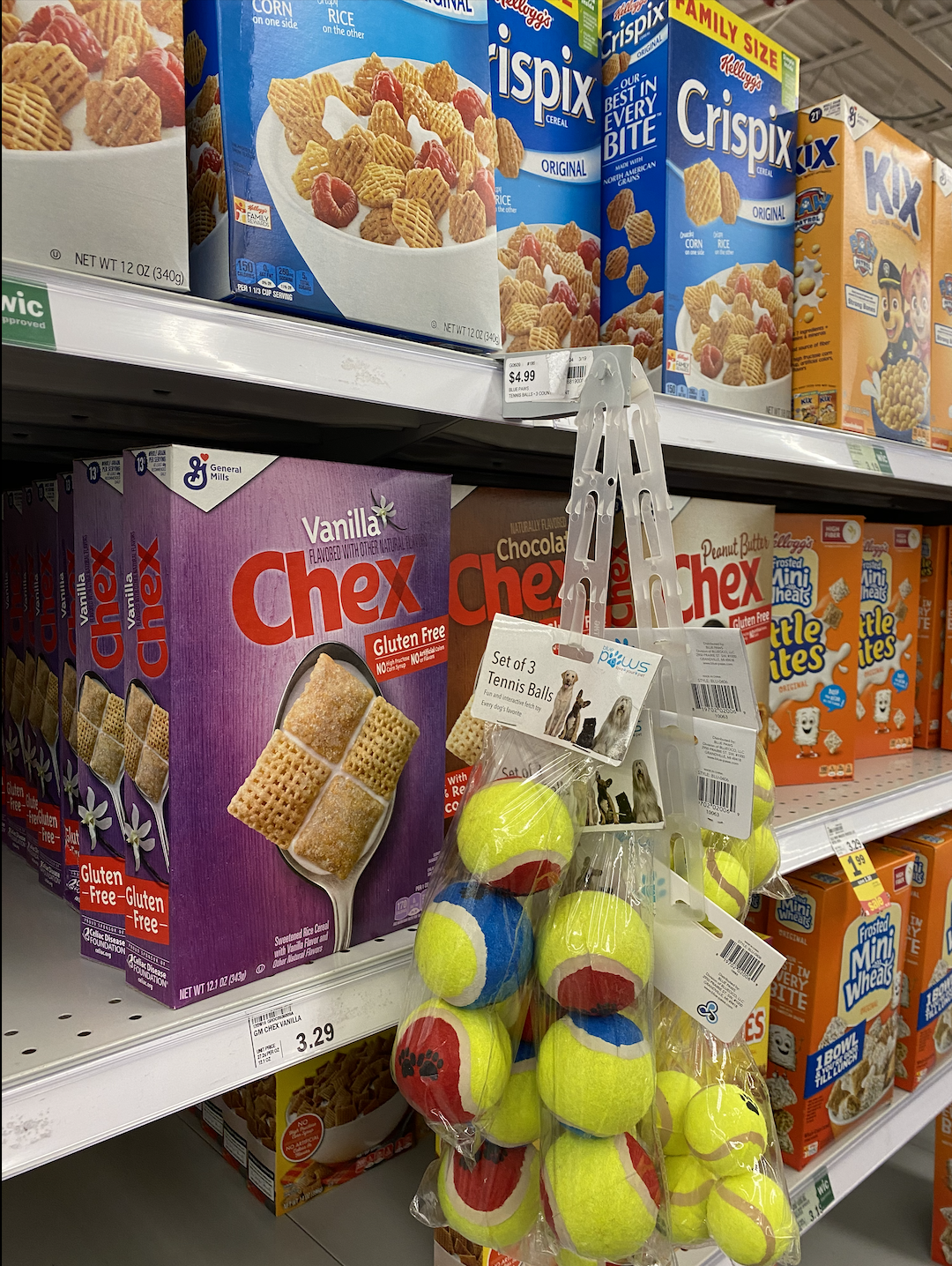
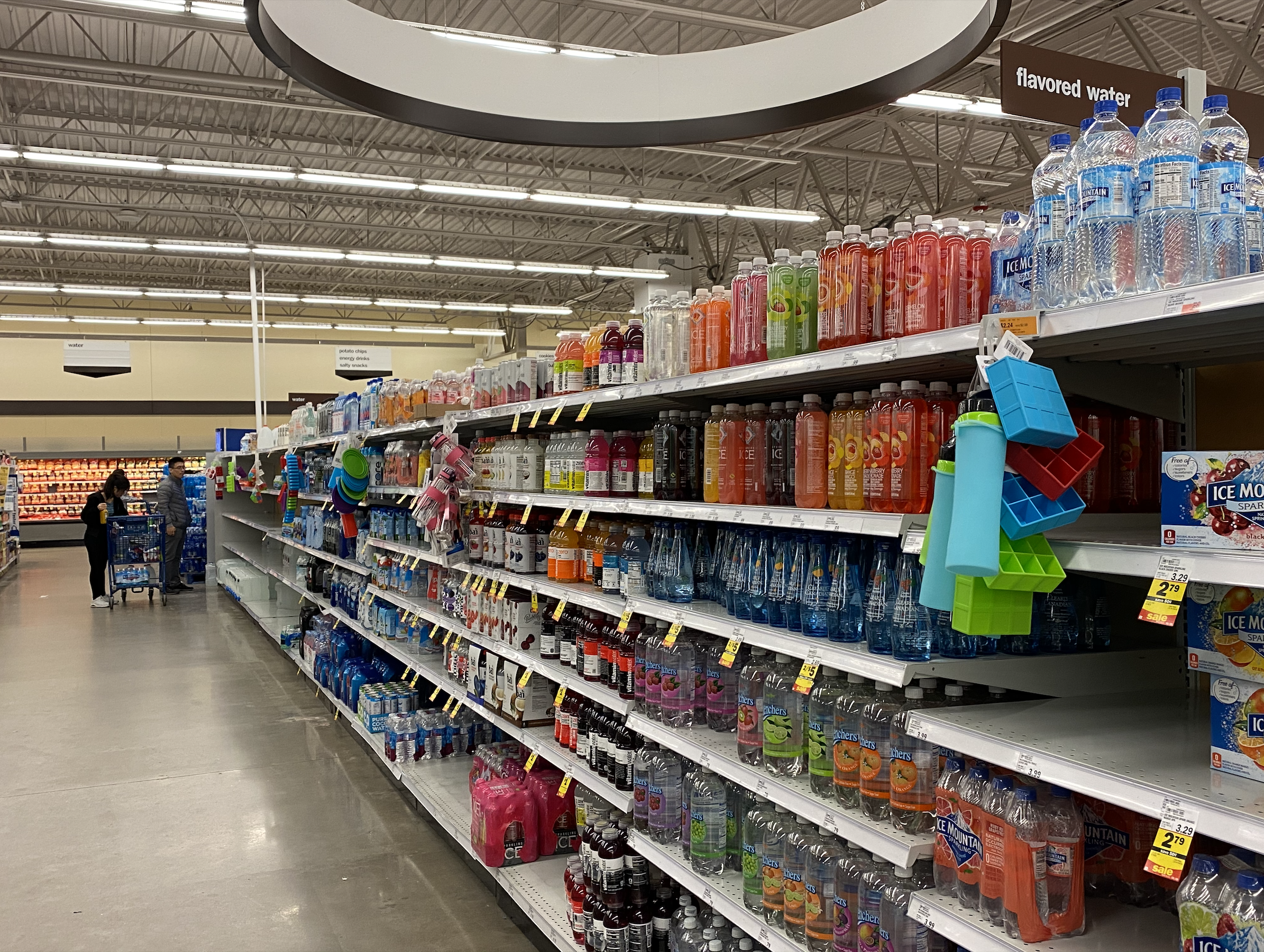
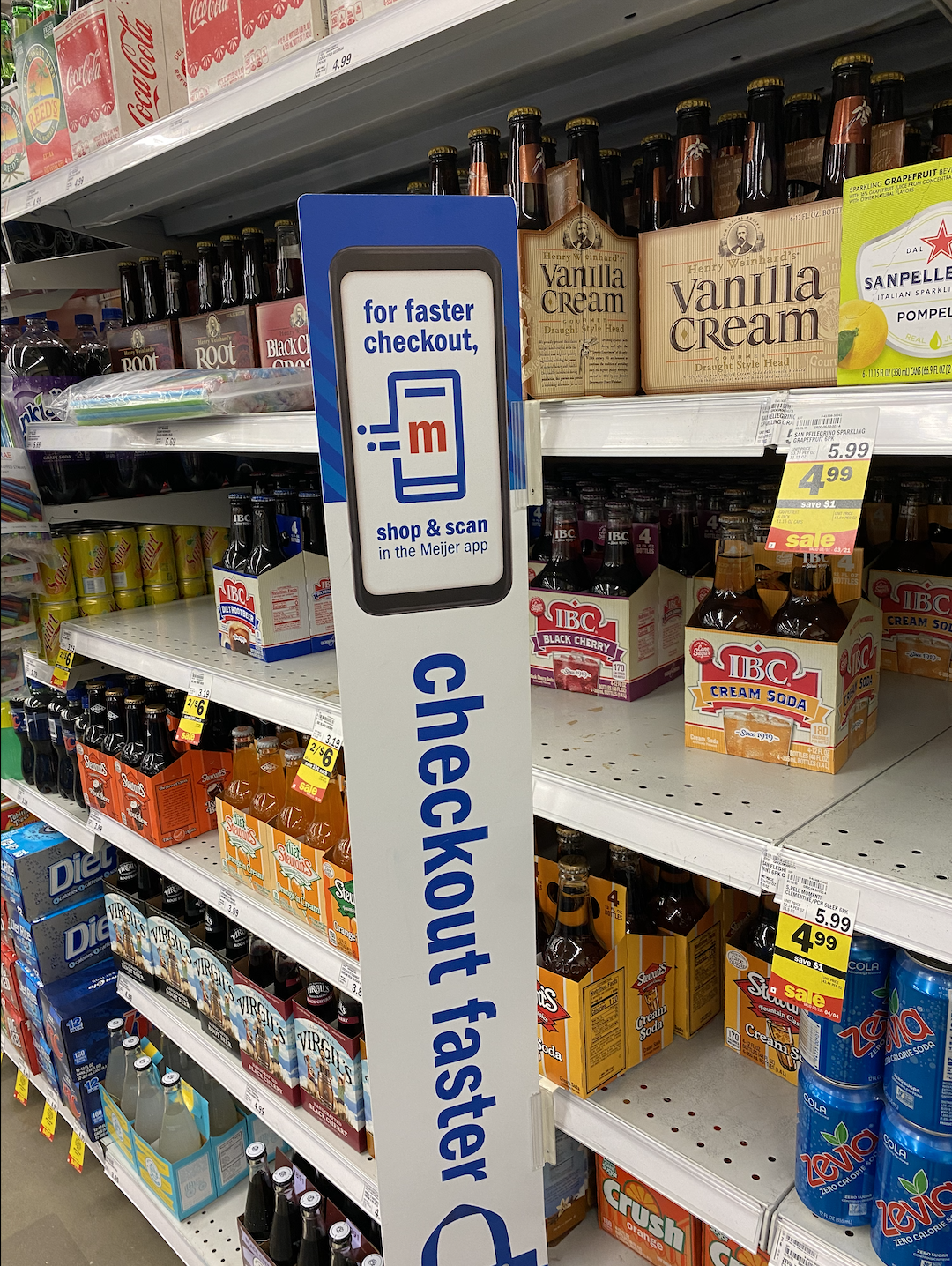
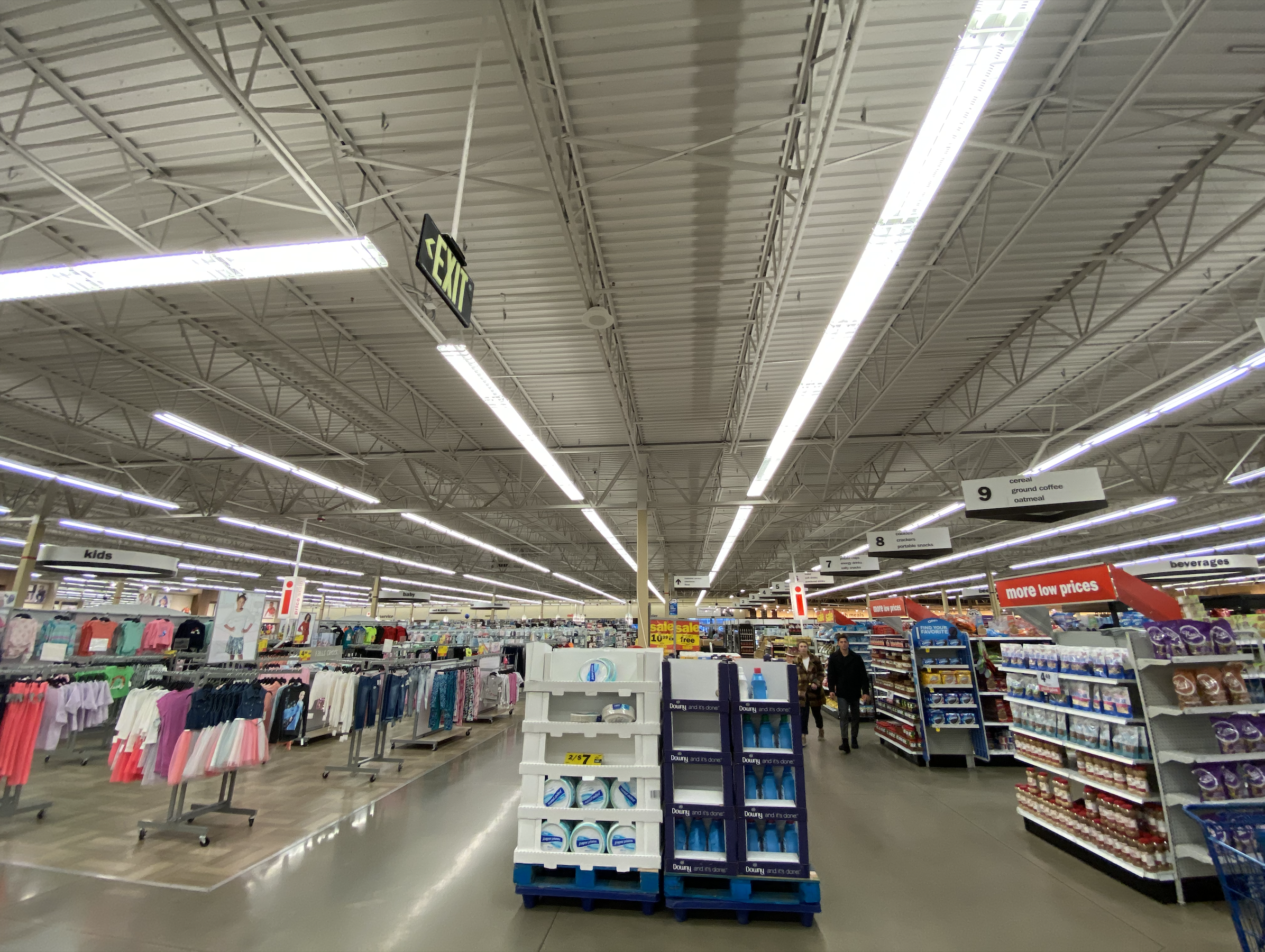
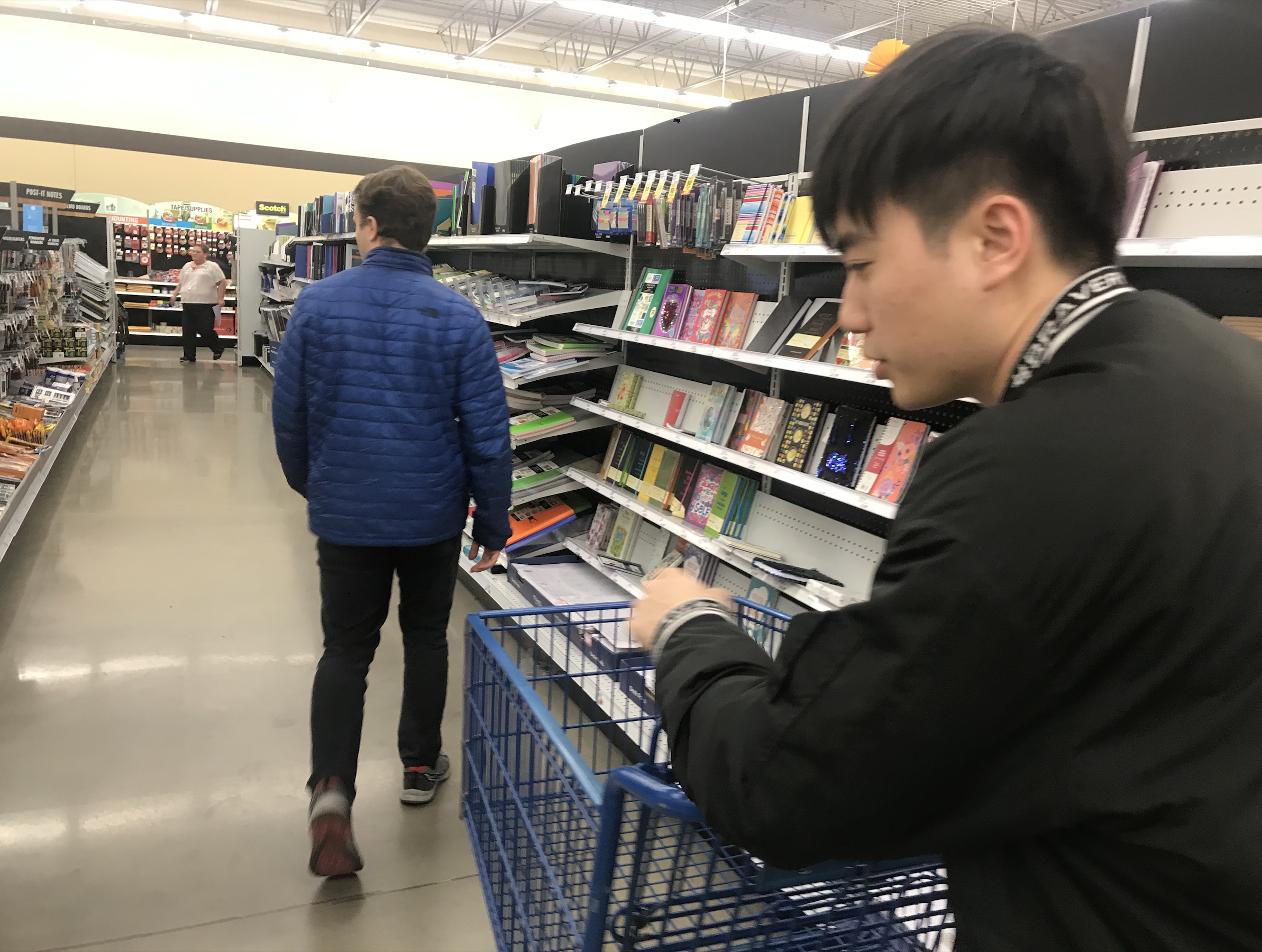
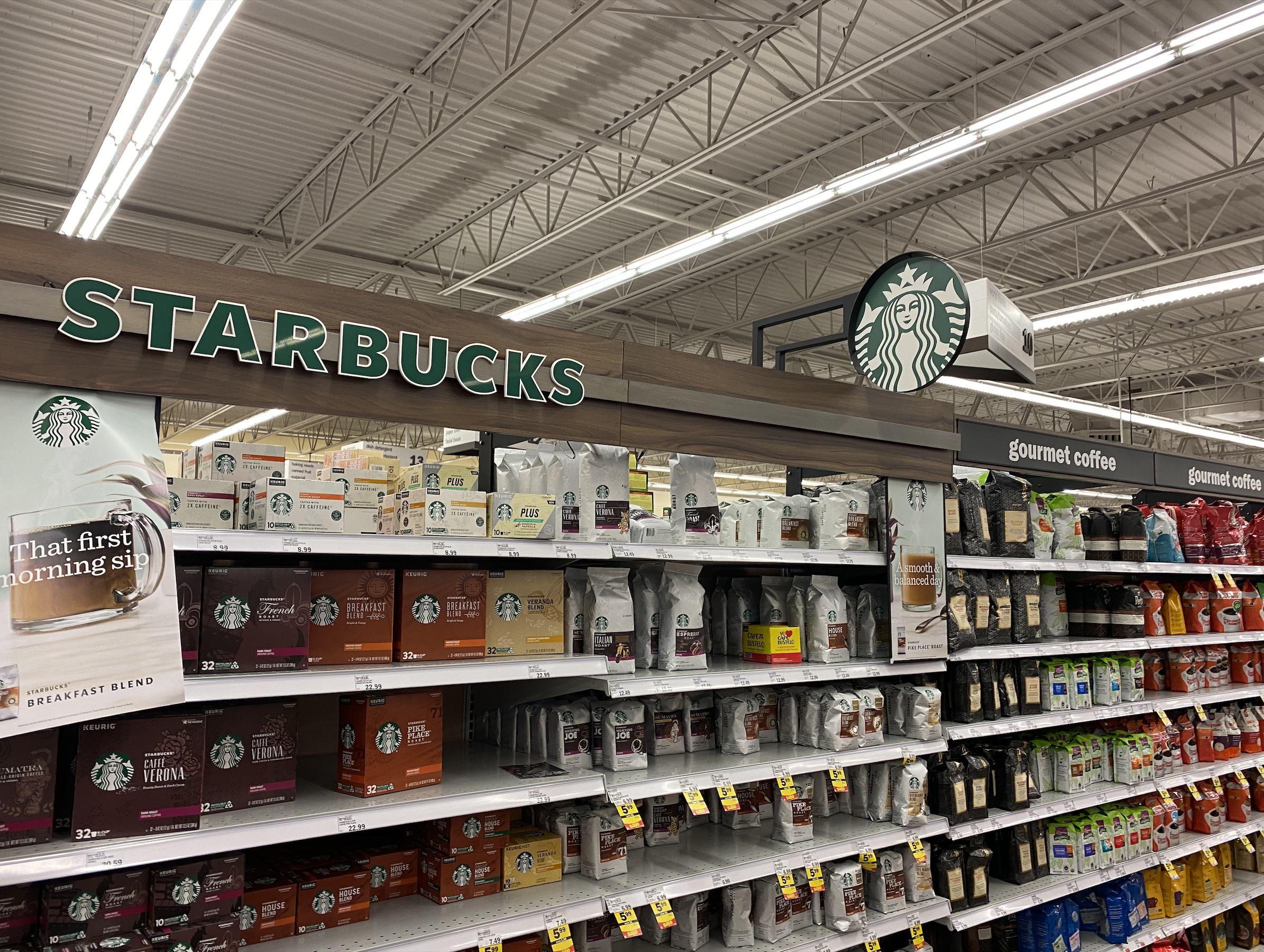
We visited Meijer in person to get a feel for the existing system and how users currently interact. We had some assumptions beforehand that turned out to be false, such as the fact that shoppers tend to take their time rather than rushing.
Takeaways
- Many shoppers compared items by reading the labels and checking the price vs size
- People reached for items placed further back in the aisle
- Many shop slowly and follow a list
- Few shop for the only the items they need and leave quickly
- Self-scan area is huge, with only one cashier/helper
Interview
Overview
We created different interview questions with different protocols so that we could get the specific information we needed from each group. Half of the interviewees were the consumer or user, and the other group we interviewed were the stakeholders, specifically a grocery store manager so that we could understand what the experience is like for someone on the inside of the grocery store operations.
Grocery Store Manager
Goals
Learn how his store chooses aisle placement
Learn what a store’s goal is when choosing store layout
Learn how common boutiques are and they are placed
Learn about what common frustrations shoppers have
Learn what common behaviors he has seen when working
Rationale
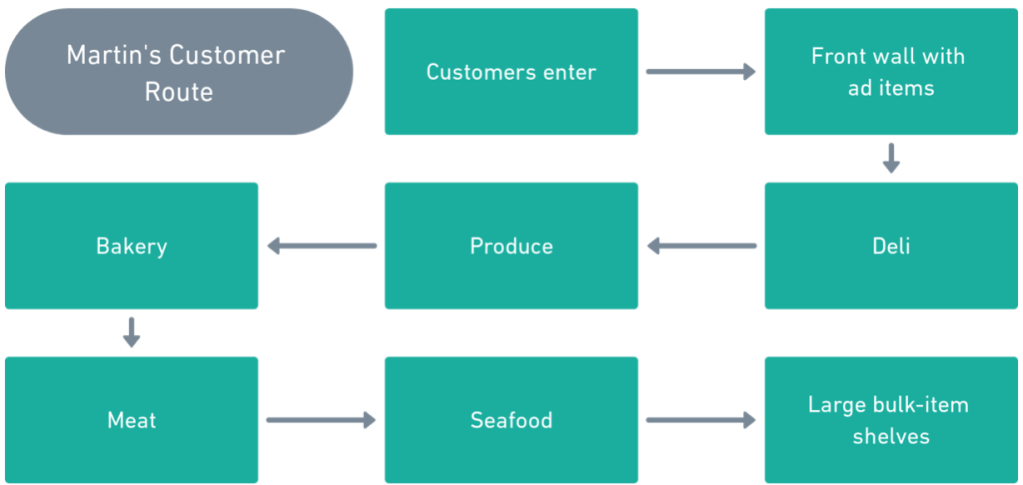
“My store is set up this way because we want the customers to go through, and work their way through methodically, thinking about what they’re going to get before they get to all the items they would usually get on their store trip. Also, people who just want to get the deli items, the bakery items, or just to add stuff can go in and get out quickly without having to search for an item forever”
Important Takeaways
- Do not change non-perishable food as long time shoppers may become frustrated and not come back
- The produce shelves are laid out in a diagonal pattern to increase product density.
- ‘S’ layout allows for maximization of space while having a path for customers.
South Korean Shopper
Goals
Learn the major differences between US and Korean Grocery Stores
Learn why people visit the grocery store and for what reasons other than the products
Important Takeaways
- Korean grocery stores sell local specialities, such as potatoes from GangWon-Do, beef from HoengSeong, tangerines from Jeju Island.
- These specialities have their own section.
Personas
Overview
In the beginning of this project, we struggled to find a user group. We created multiple personas but eventually decided on these personas that accurately represented and showed our user group. Creating these personas helped us to finalize a solution so that we could research and actually start ideation on the project and problem space.

Joe
Age: 39
Location: Suburbs of New Jersey
Joe recently moved to the East Coast and misses the farm fresh produce he had access to before. He does not have a lot of time to shop, so only goes to the regular grocery store instead of the farmers market because he wants to keep his trip as efficient as possible. He usually shops twice a week after work. He enjoys the shopping experience but wishes he could have more meaningful questions answered by the workers. He would like to know the story behind what he eats.
Outside of shopping, he has a dachshund named Dory that he takes on long walks along the river. He wants the best for Dory, so he wants to find alternatives to store-bought kibble dog food.

Jane
Age: 41
Location: Semi Rural Midwest
Jane has 3 young children, and she is an elementary school teacher.
She is looking to buy some unique spices for her hobby, baking. She enjoys shopping but it takes up tons of her time, she shops twice a week to get all the items she needs for her family’s needs.
She wants to support small, local farmers. She enjoys talking and asking questions of the growers to get the story behind the food she is buying.
She puts thought into what her own kids eat, and she teaches the importance of basic nutrition in her homeroom elementary class. Her hobbies include crafts and making jewelry.
Project Scope Shift Ideation
- Farmer’s market-like
- Bring local specialty products from different areas to your nearby chain supermarkets
- Local specialty products differ every week
- Could have it all week – or could have it on Friday only – Fresh Friday
- In-store. On a floor space that doesn’t take up too much area
- Farmers pay transaction fees to the store. 5% (higher than store margin)
- Chain supermarkets are happy because it brings in more people to the store
- We decided to call it the “Harvest Hive”
Task Flow Analysis
Overview
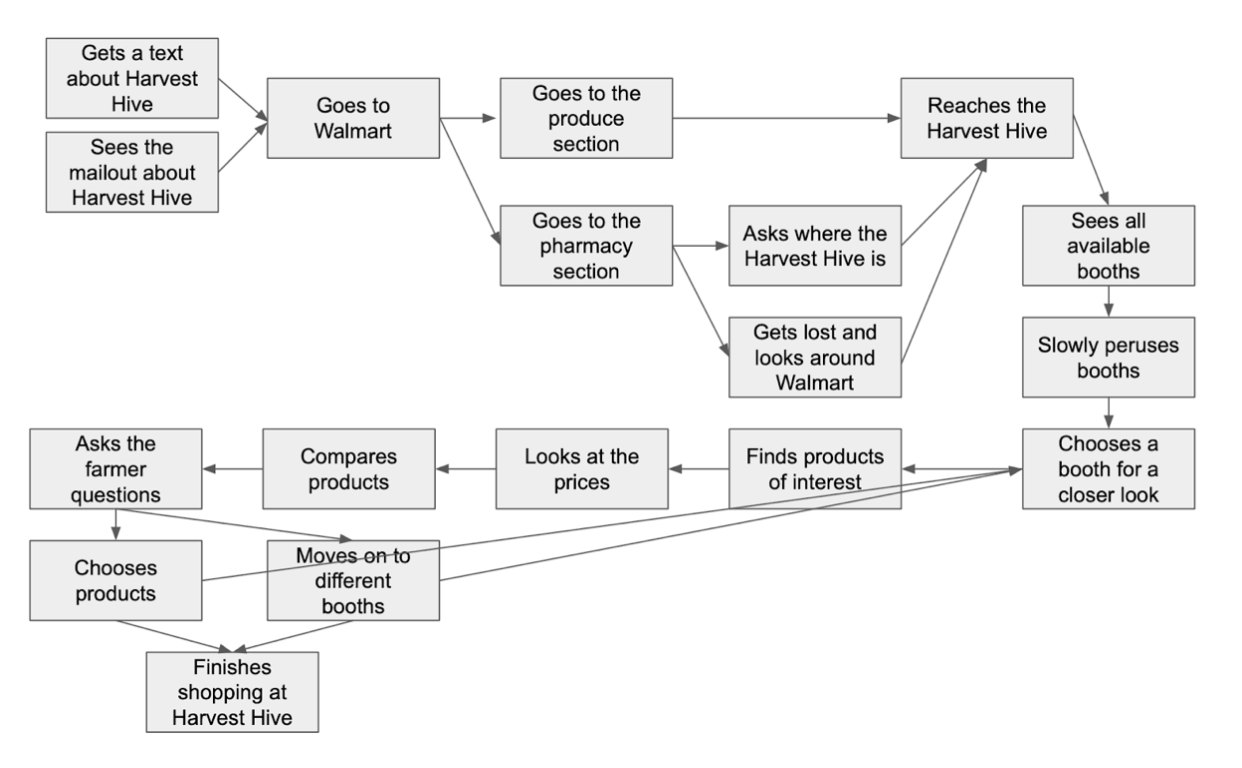
We created this chart to help us make sure that we touched all parts of our solution in our test. This chart helped us close up any gaps and make sure that our prototypes were thorough in making sure every task and idea is accounted for.
Takeaways
We learned about what kind of processes the users can go through before physically reaching the Harvest Hive. We saw that we were assuming that people would know that a farmers market is being added to their local Walmart, when really there needed to be a way to show people what is going to be at the shops. We realized people may not reach Harvest Hive, so we decided to send out texts to enrolled customers and send mail-outs to them also. That way, our users would be notified of what is going to be new this week before entering Walmart.
Sketches
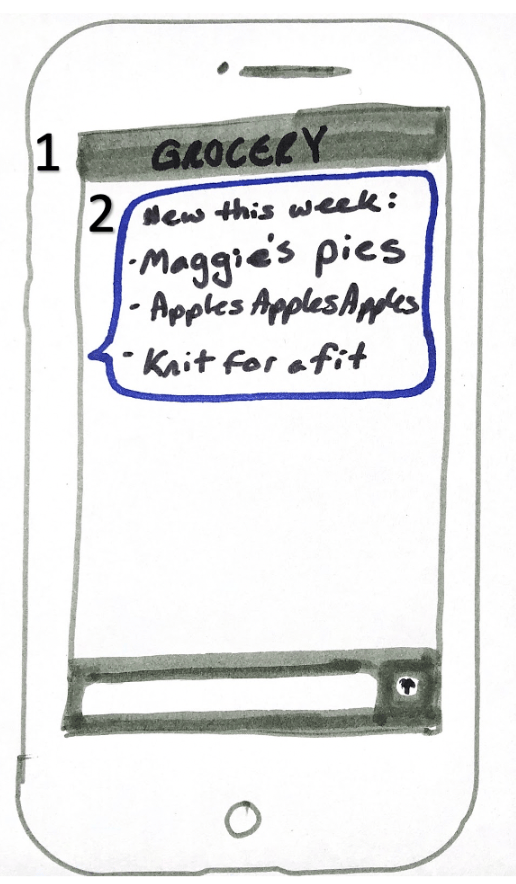
- Text from the grocery store.
Every member of this grocery store will get this text - Shows what’s going to be at the Harvest Hive for a week
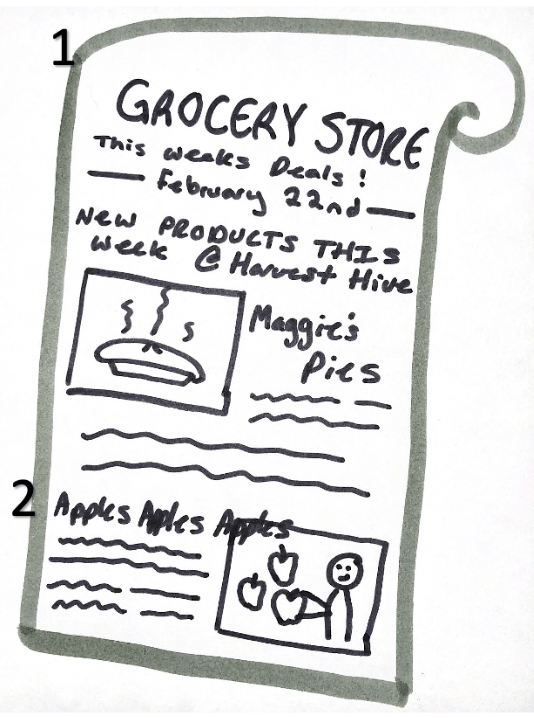
- This is a flyer that informs shoppers on when Harvest Hive will be inside the grocery store
- This shows what produce will be at Harvest Hive that day
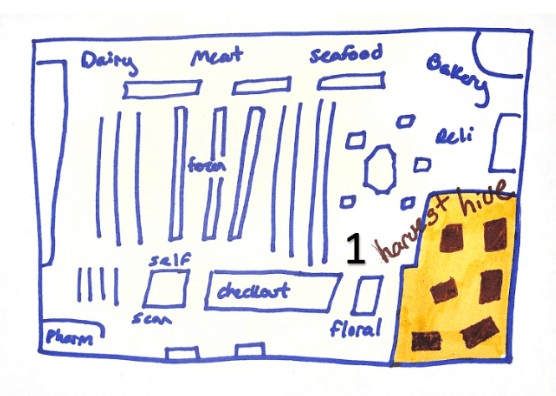
From our primary research we learned that the produce shelves can be moved. We also learned an ‘S’ shaped pattern is good to save space and it guides shoppers. This is why we decided to make “Harvest Hive” in the produce section and put it in an ‘S’ shape.
Test
Overview
Our testing prototype was a layout change and weekly event where the store would move the wheeled produce bins out and make room for farmers and vendors to set up their booths.
The store would take higher margins on the farm fresh items than they normally would make from their own produce, and the farmers would have a platform and a huge audience, and the shoppers would have a wide and colorful selection of fresh produce in the same store that they normally shop.
We chose to not test with a physical prototype because of the nature of our solution. We did not test the layout of the store, but instead got direction from users by putting them in a scenario and walking the users through how they would use our product.
Round 1 Takeaways
- People said that they would go multiple times per week, with the average time that people would stay at the market being ~30-45 minutes.
- People said that they would buy the local foods, and buy produce based on their cooking needs.
- People valued the more personal element of being able to chat with the farmer, but having the farmers there wasn’t a necessity for knowing that the food has been recently harvested.
Round 1 Iterations
We had the farmers market happening every Friday, but after testing we realized that we need to offer these opportunities either multiple times per week, or everyday. People are likely busy during the week, and having multiple times to visit the store will make customers happy.
We also found that people were okay with paying more for the farmer’s market products. When we asked our target user if they were okay with paying more for fresh items they said “I would rather have the quality over the extra cost difference”, so we are going to increase the margin that Walmart adds to make sure that it is profitable for Walmart and the booth owners.
Round 2 Takeaways
Most of the takeaways were the same as before, besides:
- People will come to Walmart for the market.
- People want to come and support.
- One person said farmers weren’t necessary because they know the produce is already fresh, while another said that they wanted to know the history of the farmer, where the land is, and when the food was harvested.
Round 2 Iterations
From our second round of testing, we realized that we should only offer our farmers market twice a week. This is a good balance of having the market available to customers, while still making it a special event that isn’t always available. This also values the farmer’s time, as sending someone to set up the booths every day will be costly and time consuming for them.
Another change we are making is to mandate that the farmer is there. Most of those who we interviewed said that they valued talking to the farmers, and that having them there to explain the origins of their foods, is important for the allure of the farmer’s market.
Final Prototype
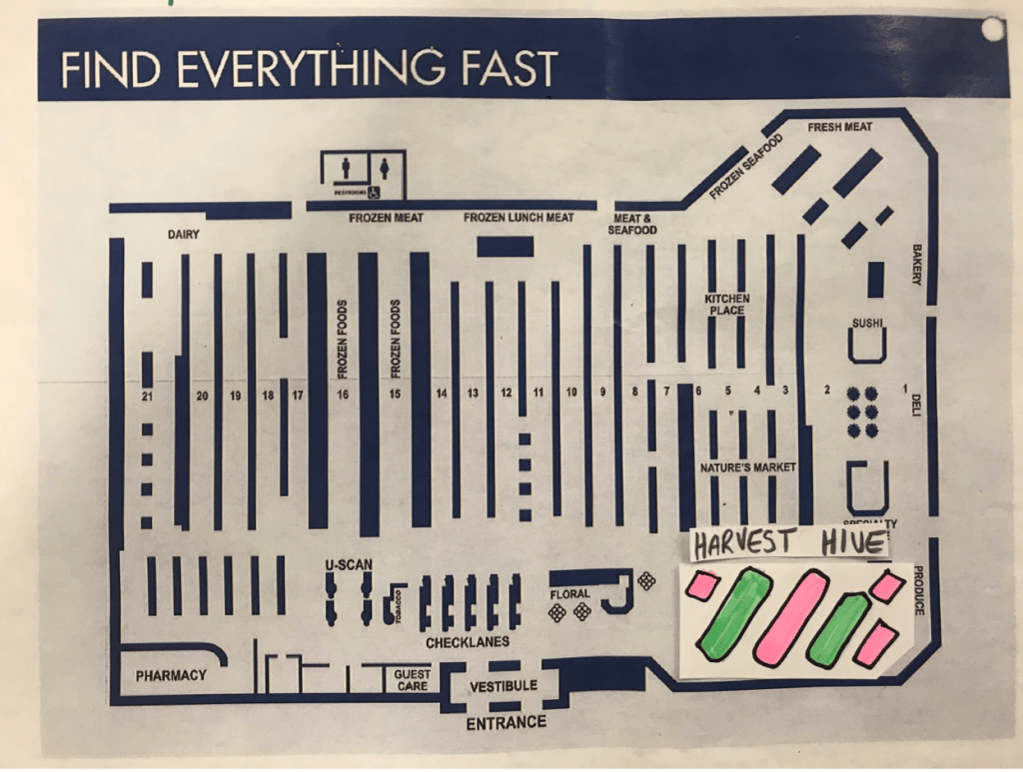
We are adding a farmers market to replace the movable produce shelves of Walmart two days a week. These will be open between 10 am and 5 pm.
The farmers will be at their booths to represent their products, and answer questions that shoppers will have. These booths will be in the same ‘S’ pattern that the produce is usually in, as this maximizes the space that the booths can take up while walking around the store.
In order to counter the cost of moving Walmart’s produce section, we are adding a markup on top of what the farmers charge. This is to make sure that it is profitable for Walmart, and from our tests we saw that people were okay with the higher prices of the produce.
This is focused on the experience of bringing the farmers market to a large corporate supermarket, so that the shoppers had a better way to get access to hard to find items and fresh produce.
Final Rationale
Our solution allows for more embodied experiences from the user’s perspective. The shoppers spend time interacting with farmers and asking questions. From Walmart’s perspective, Walmart does not lose any profit, as Harvest Hive gives a 5% cut of items sold from the Harvest Hive to Walmart. This solution will also attract more customers to Walmart.. This is more than double the normal rate of 2.5% margin that we found in secondary research. From the Farmers’ perspective, they will broaden out their range of customers as not only people looking for fresh products, but also recreational shoppers will stop at Harvest Hive to look at what’s new.

