To create a responsive web experience that creates, extends, or otherwise builds on grassroots efforts in a local community context.
Problem Statement
West Lafayette and Lafayette low income residents need a way for their voices to be heard to make needed changes to better the community’s access to public transportation.
Our team has identified that public transportation has some issues, thus we narrowed it down to the bus system which is one of the dominant modes of public transportation in Lafayette and West Lafayette. More specifically, the bus system has a favor towards students in the area; the residents are essentially forgotten. Through this project, our team has looked for a way to empower those who are not students in the Lafayette and West Lafayette area and need to use the bus system for their mode of transportation.
Co-design Session
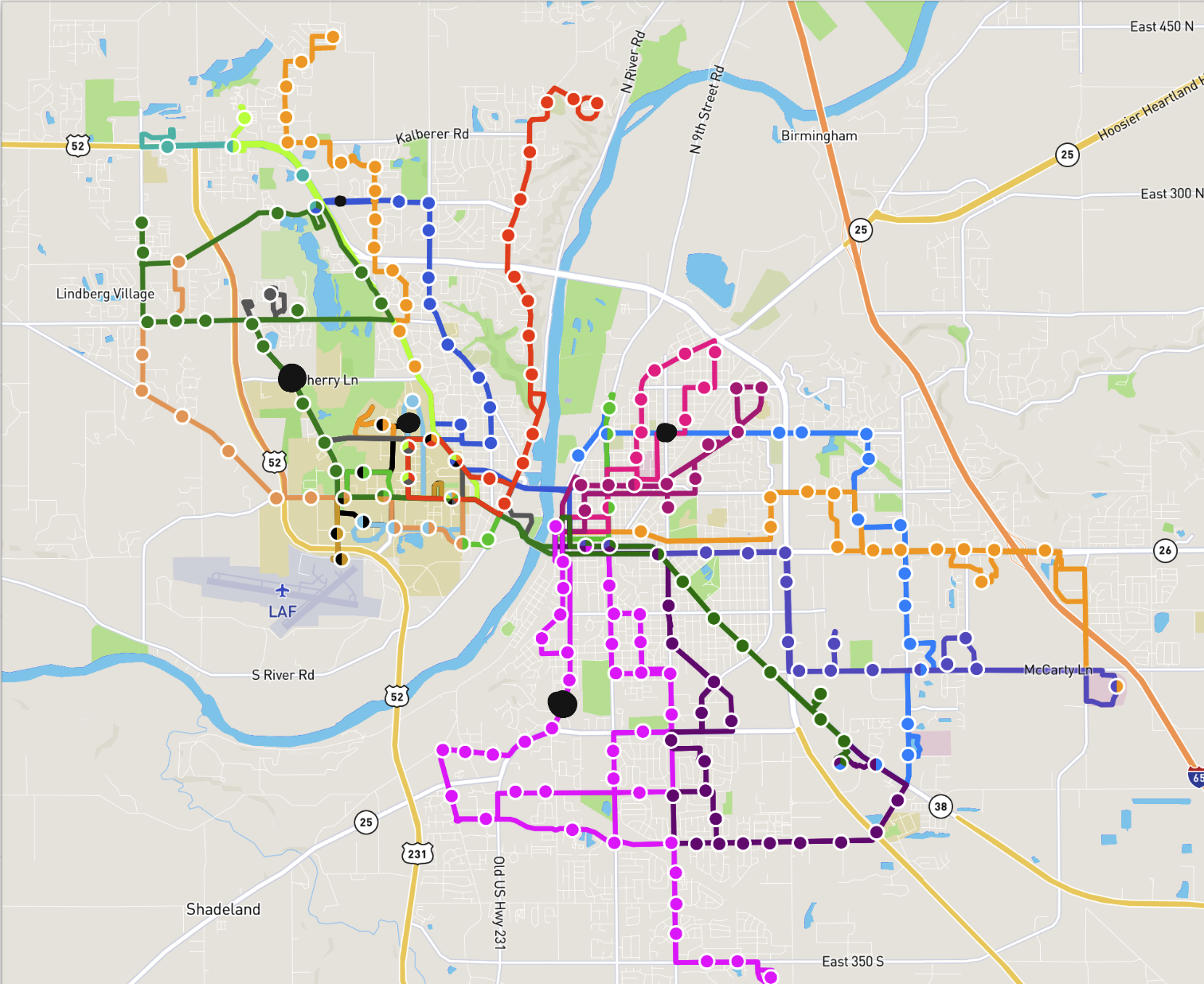
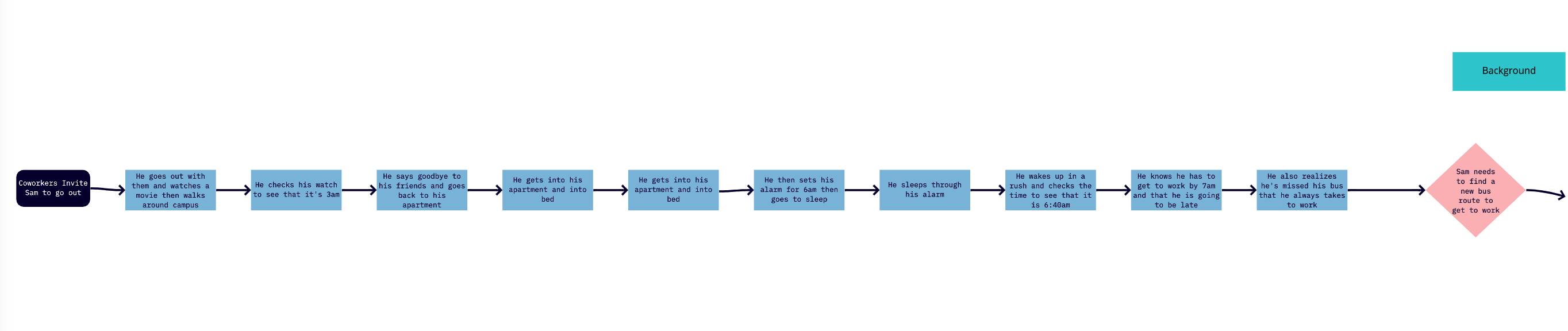
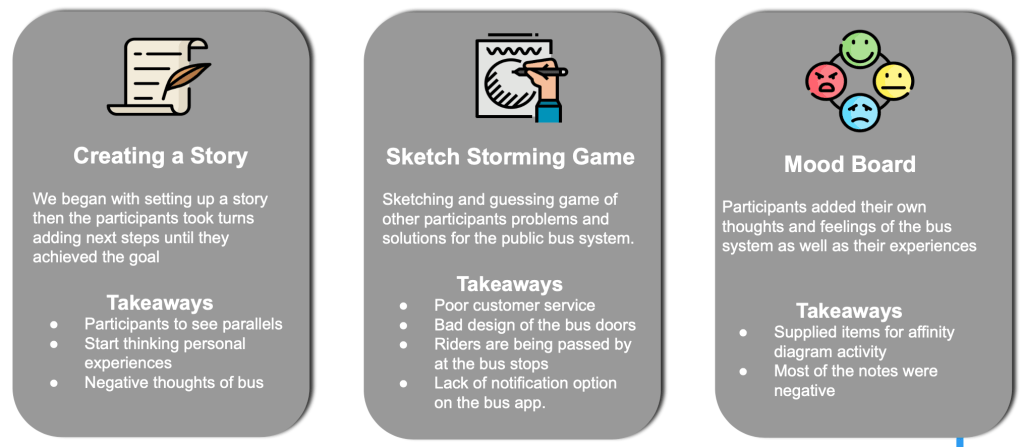
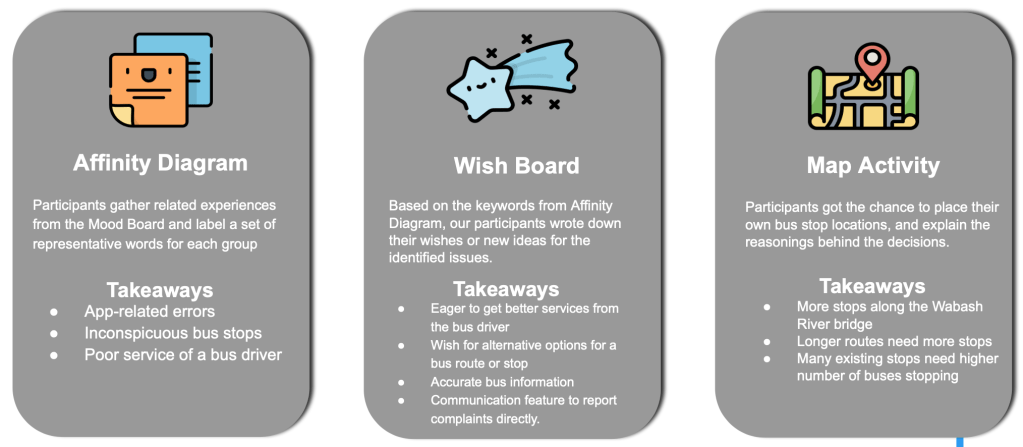
We opened up an online co-design sessions to the public in attempt to gather insights from the locals. Our co-design sessions included 5 different stages: Creating a Story, Sketch Storming Game, Mood Board, Wish Board, and a Map Activity. These 5 stages were all designed to evoke daily emotions that may be difficult to share without any context.
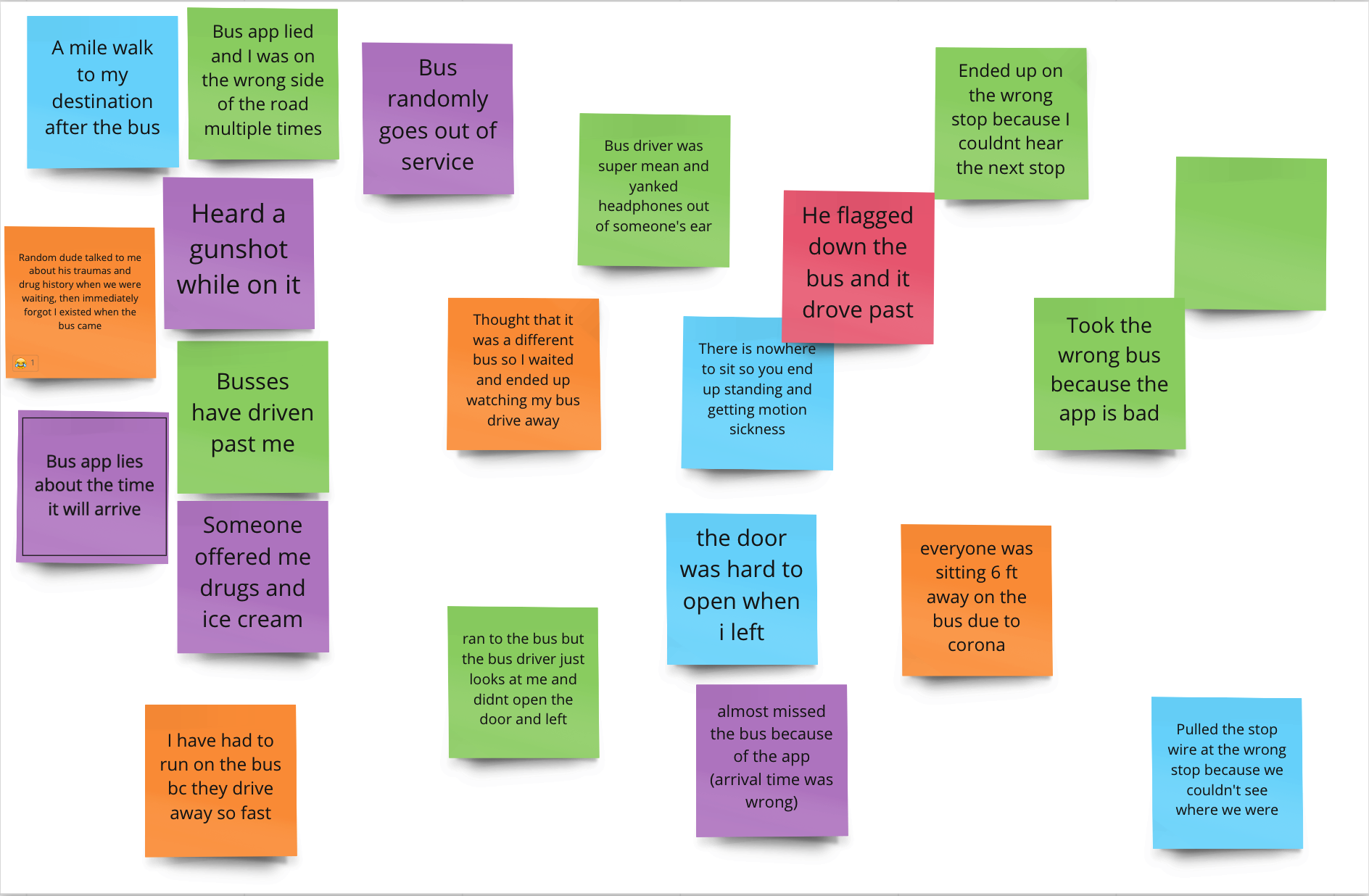
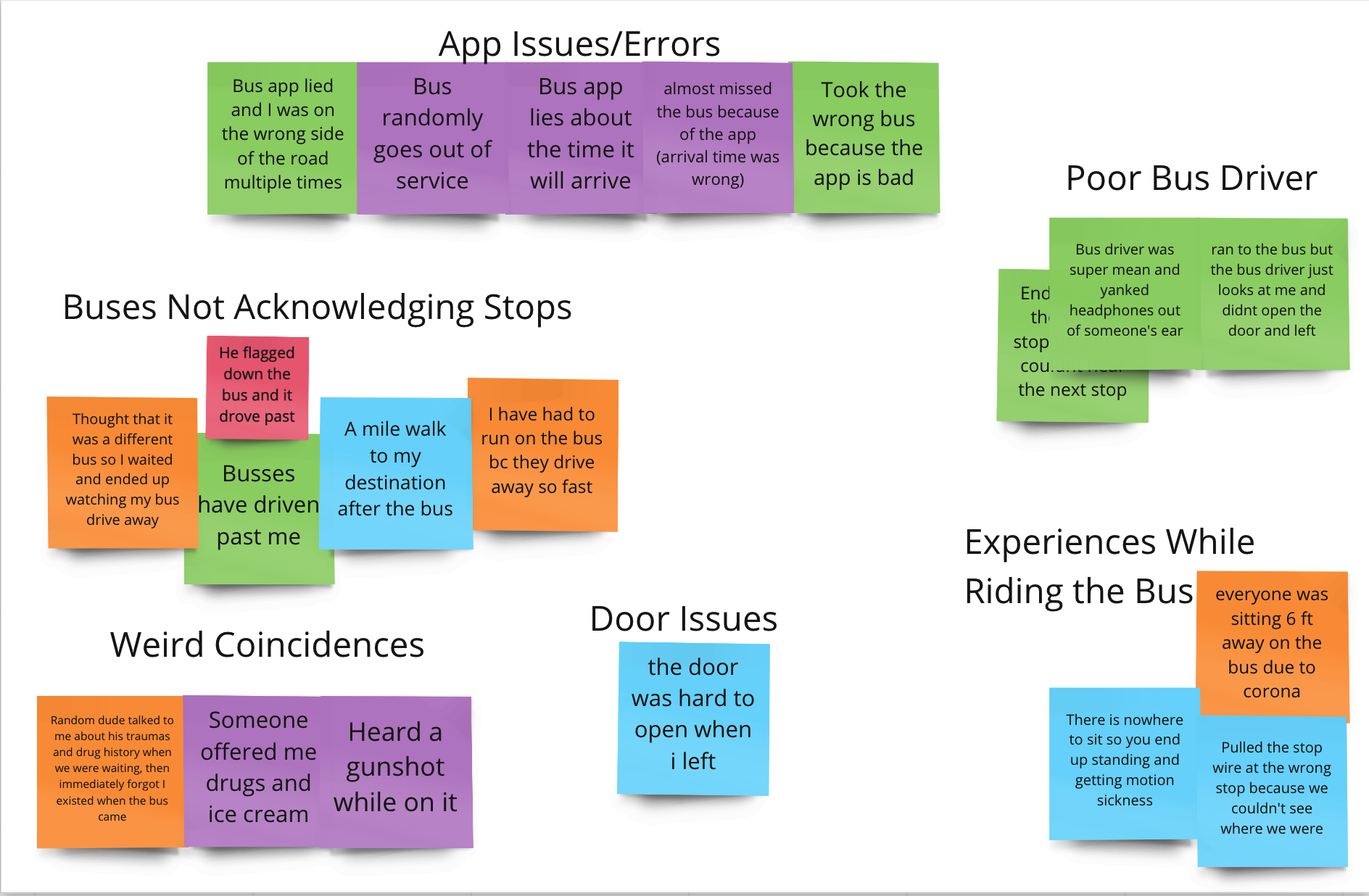
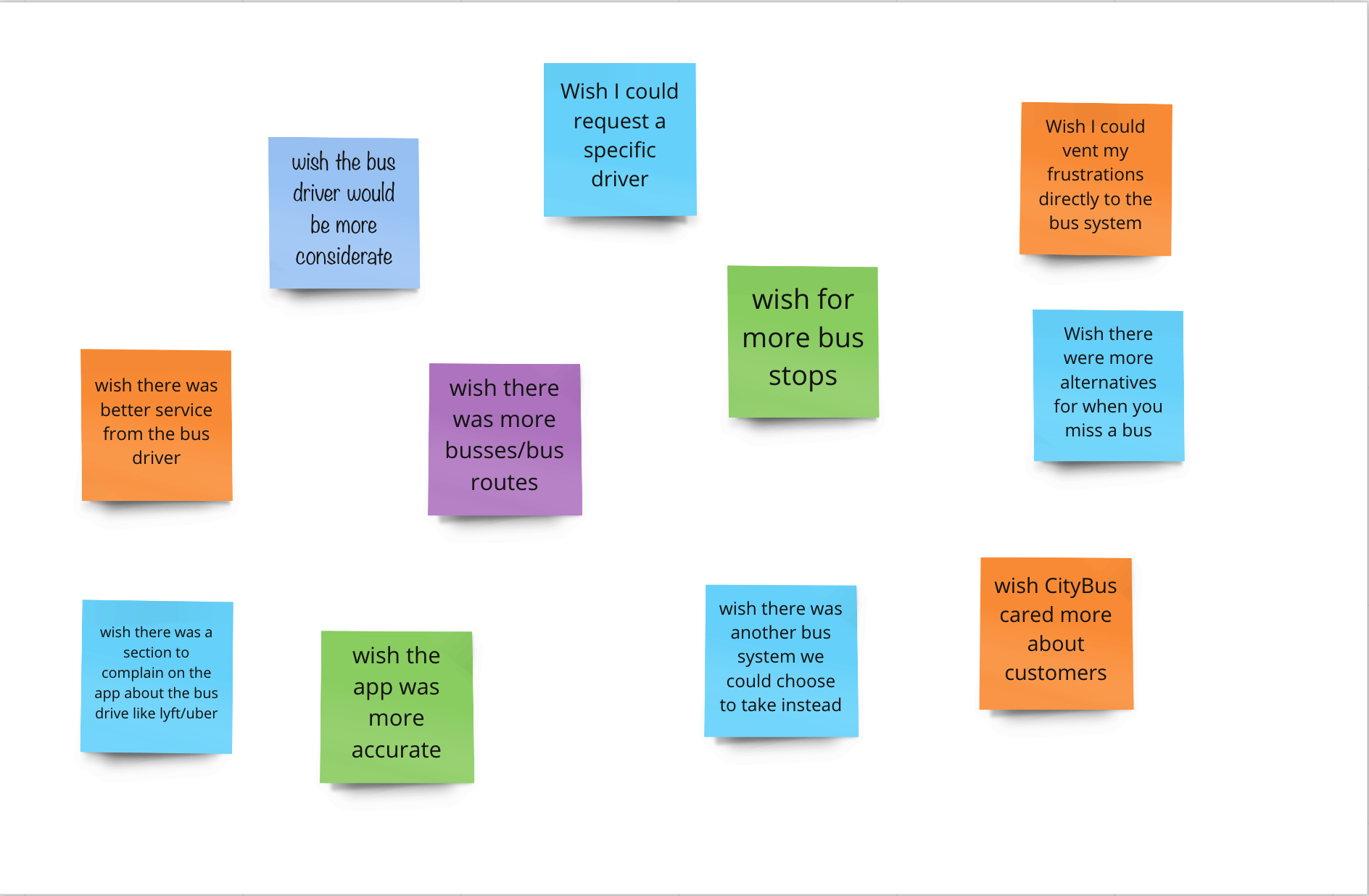
Co-design Takeaways
Wireframes
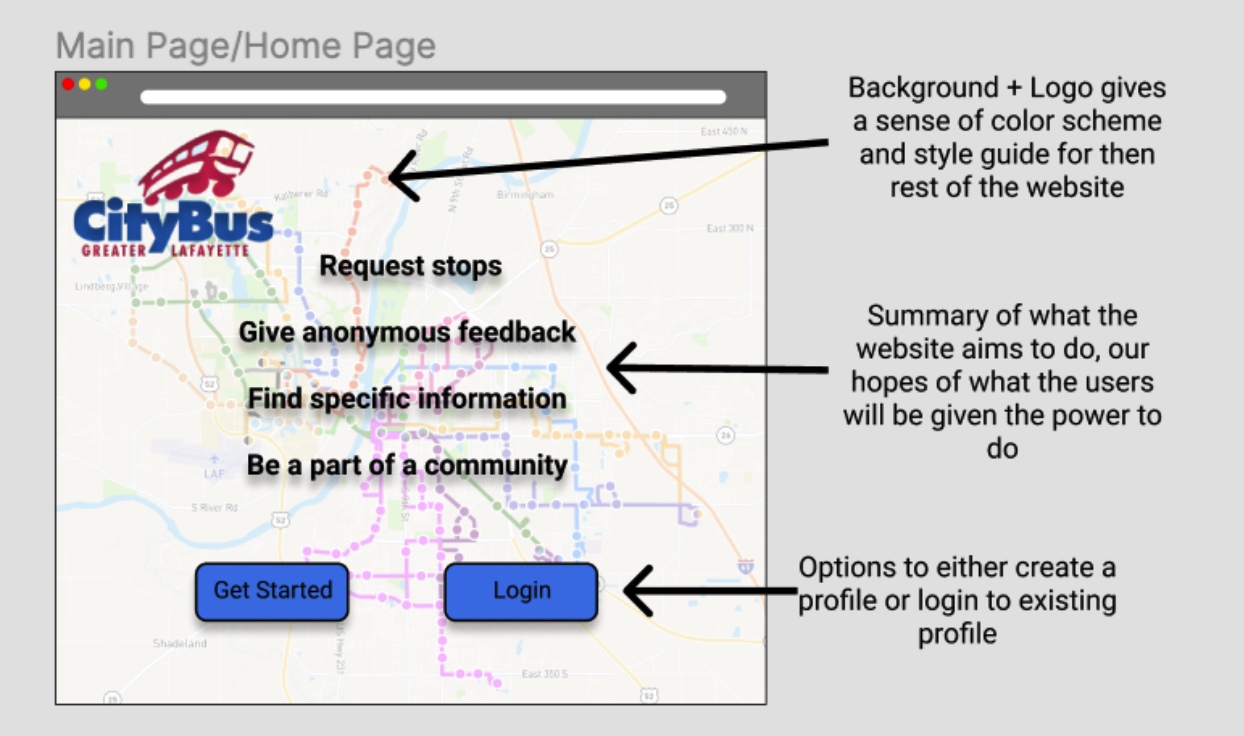
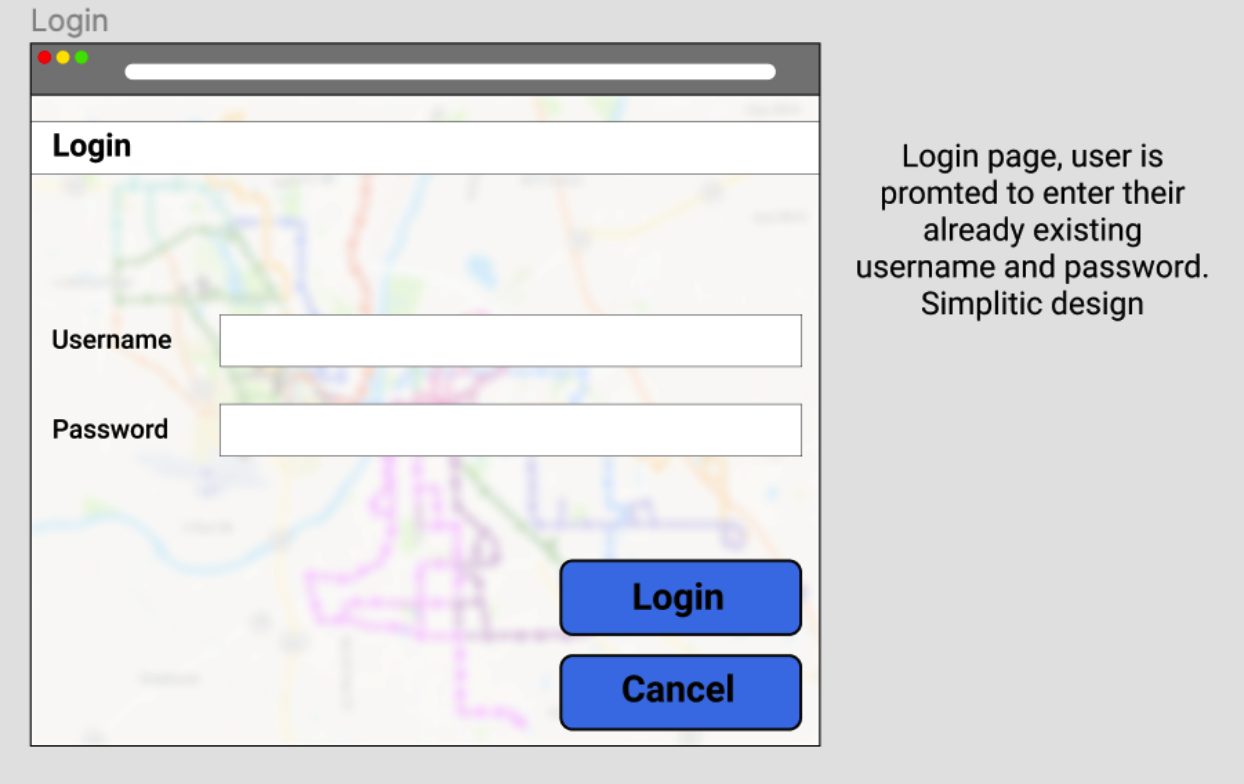
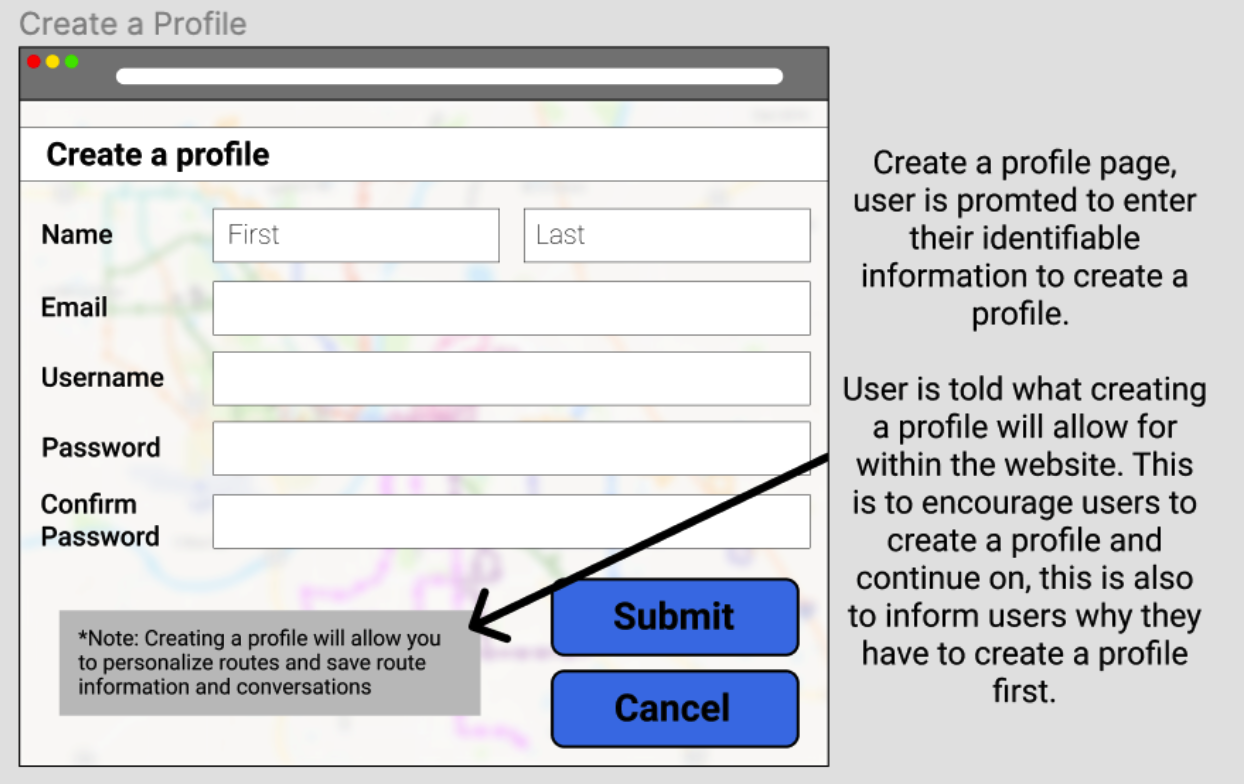
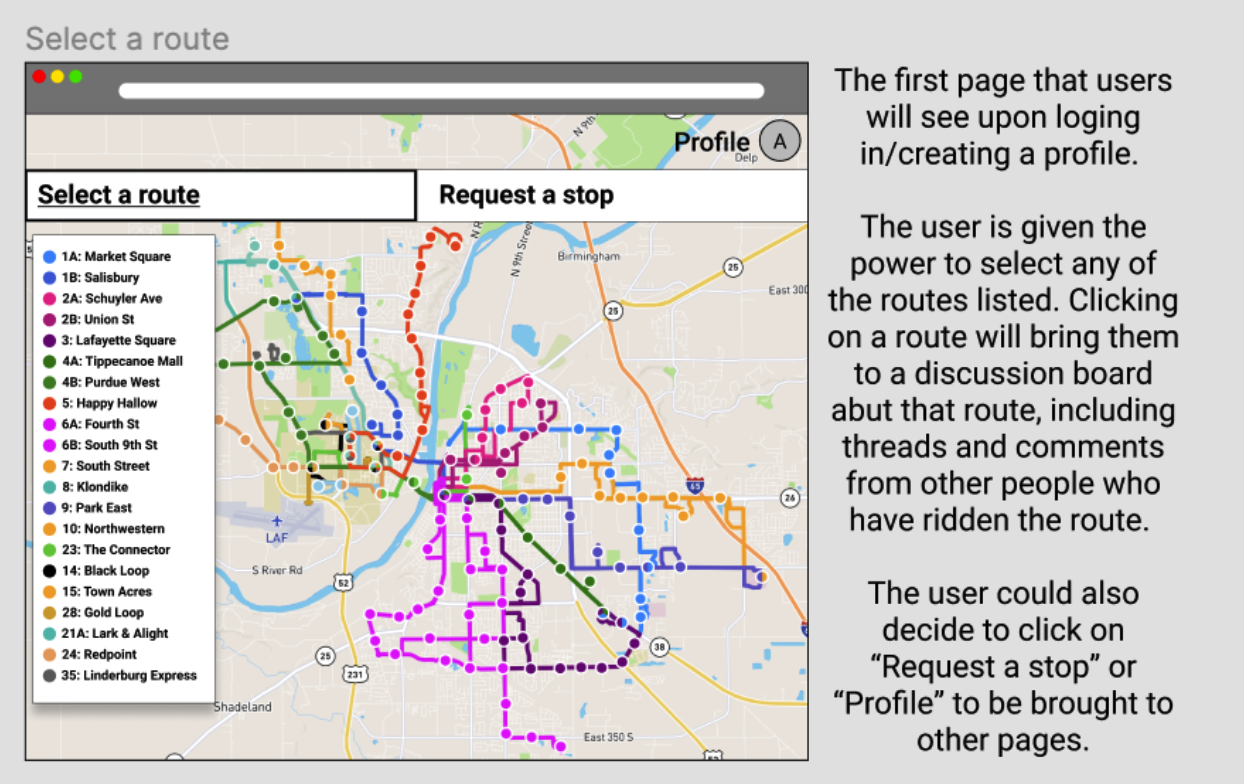
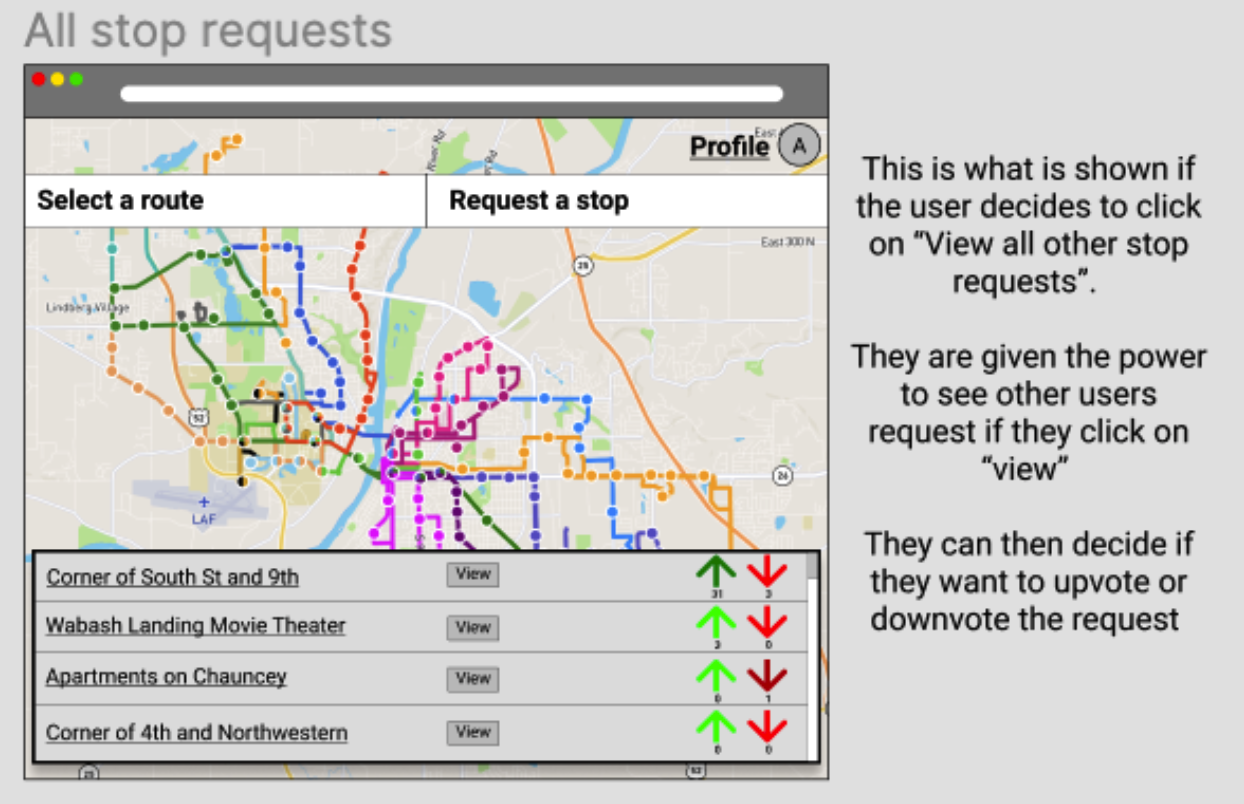
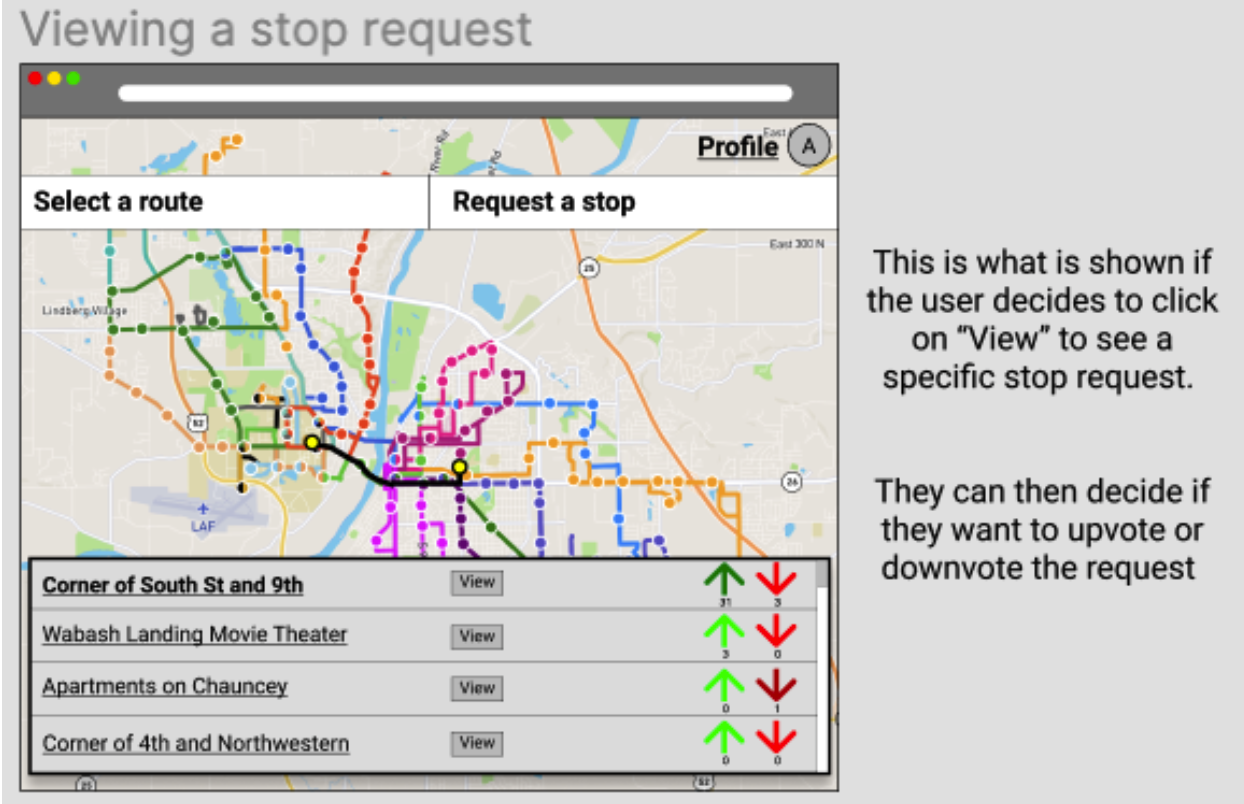
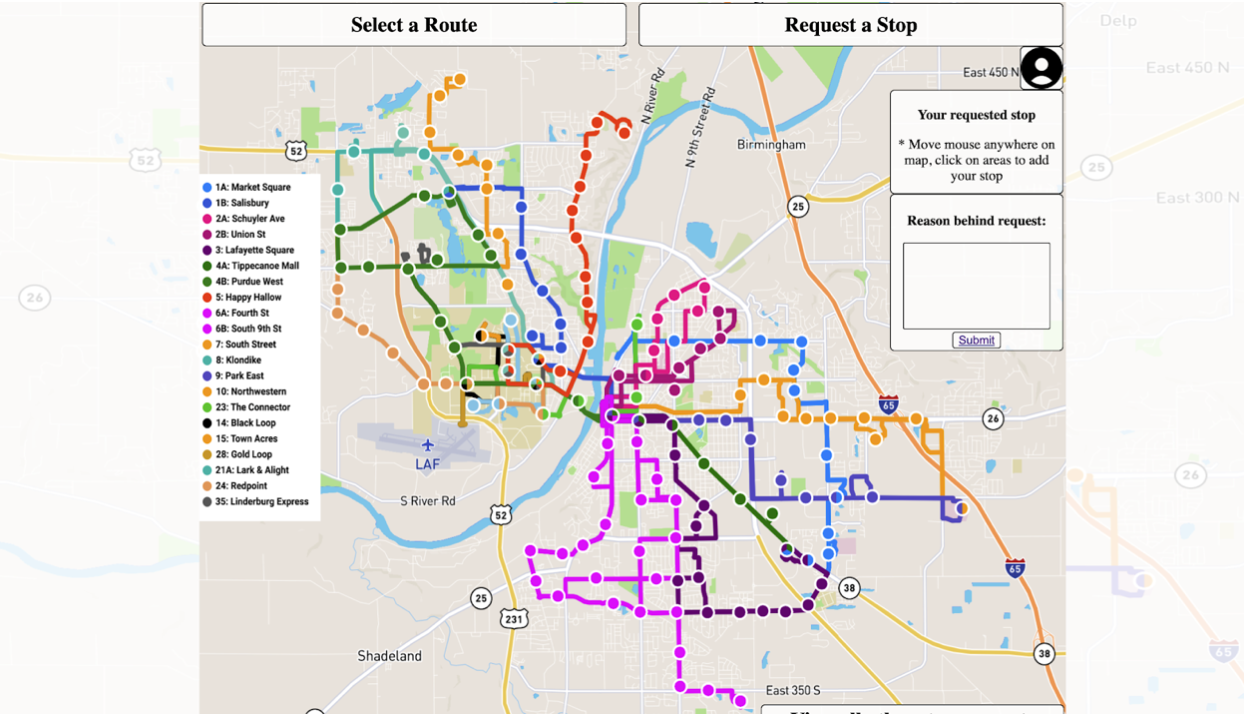
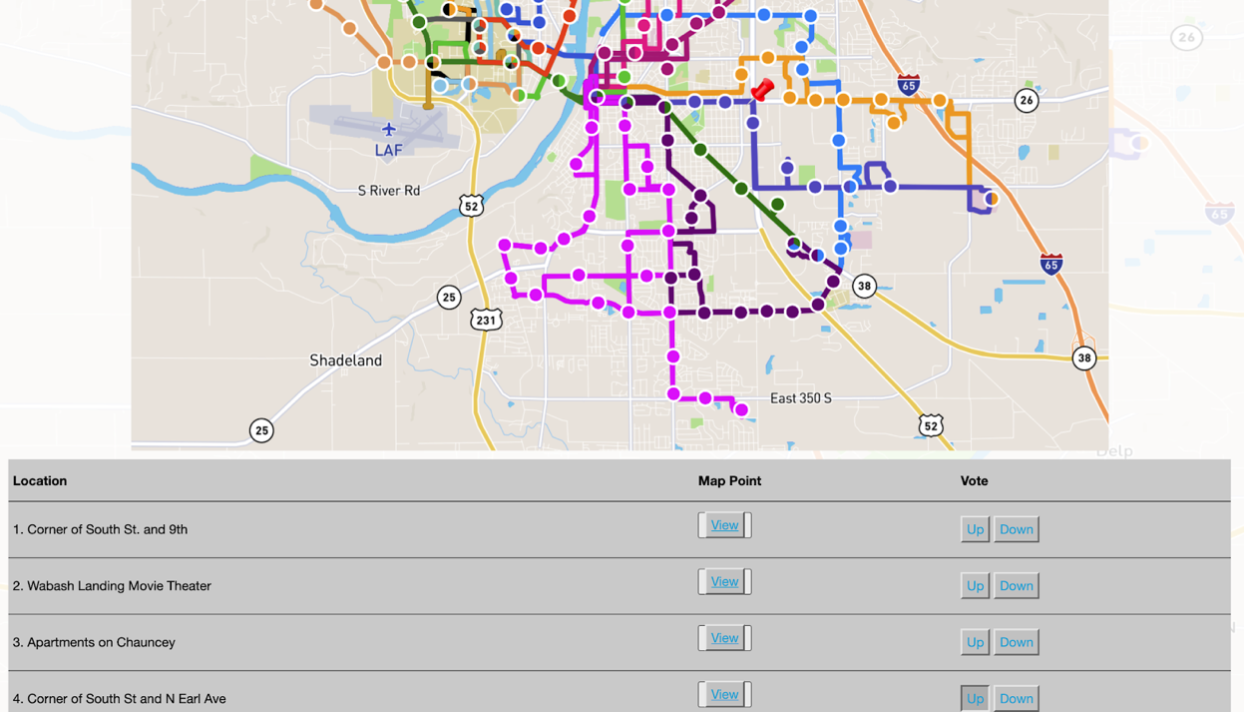
We gathered all the research information and applied the knowledge to first our sketches then to low-fidelity Figma wireframes. Our goal for the website was to create a safe environment online where local residents can feel empowered from freely posting requests and concerns on the bus routes and stops. The forums are all online and public; therefore other users can leave comments. We also added stop request feature so that residents can request additional stops at places where stops are scarce.
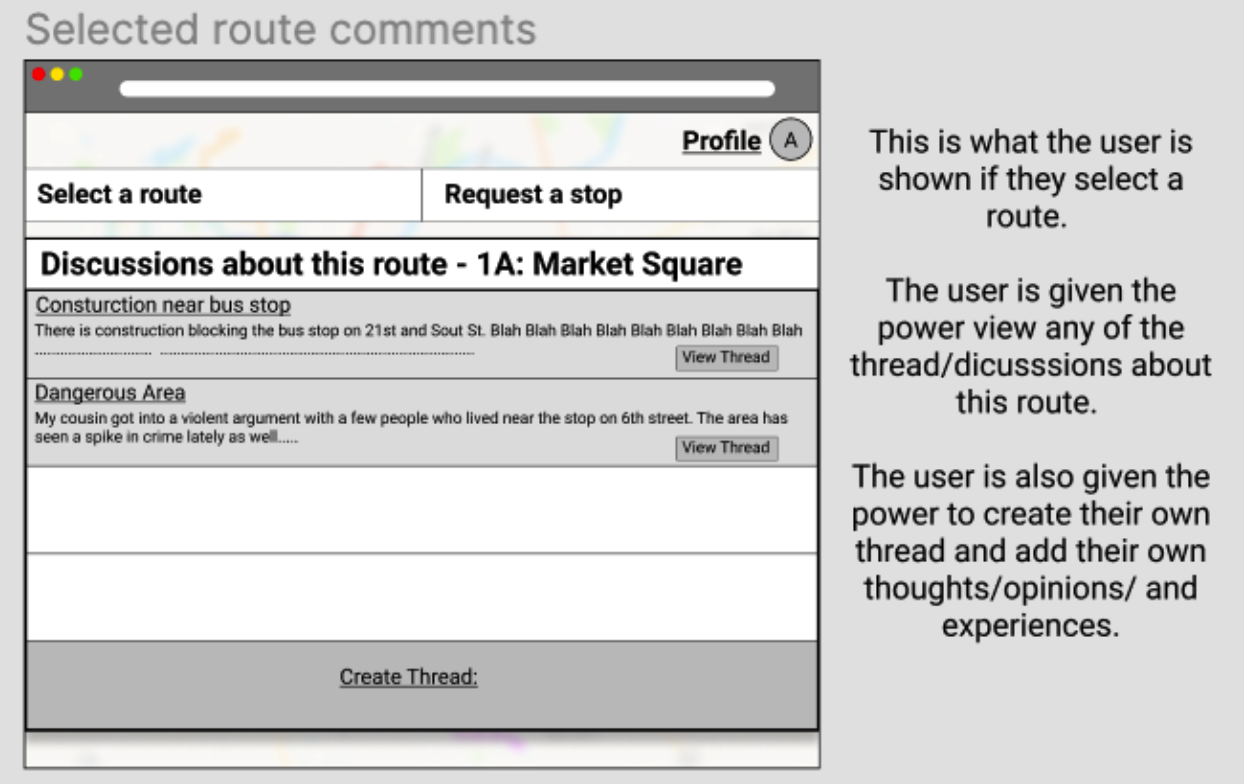
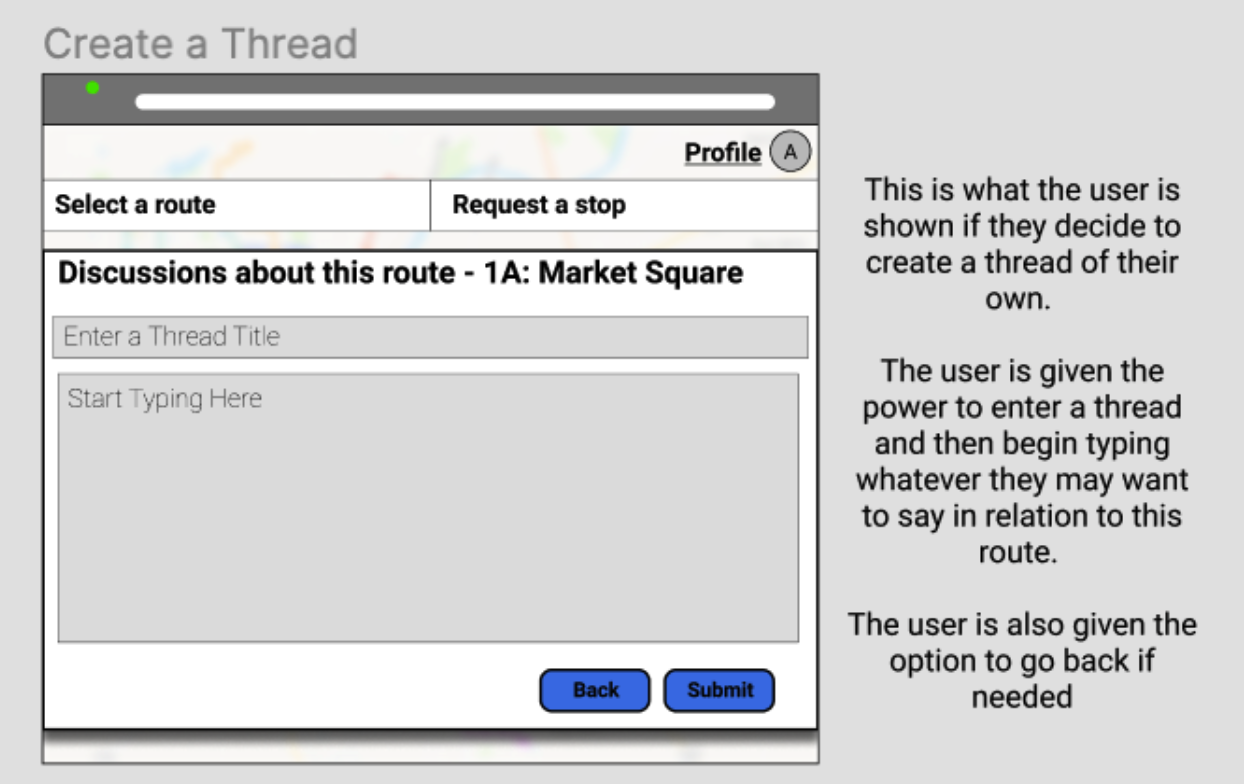
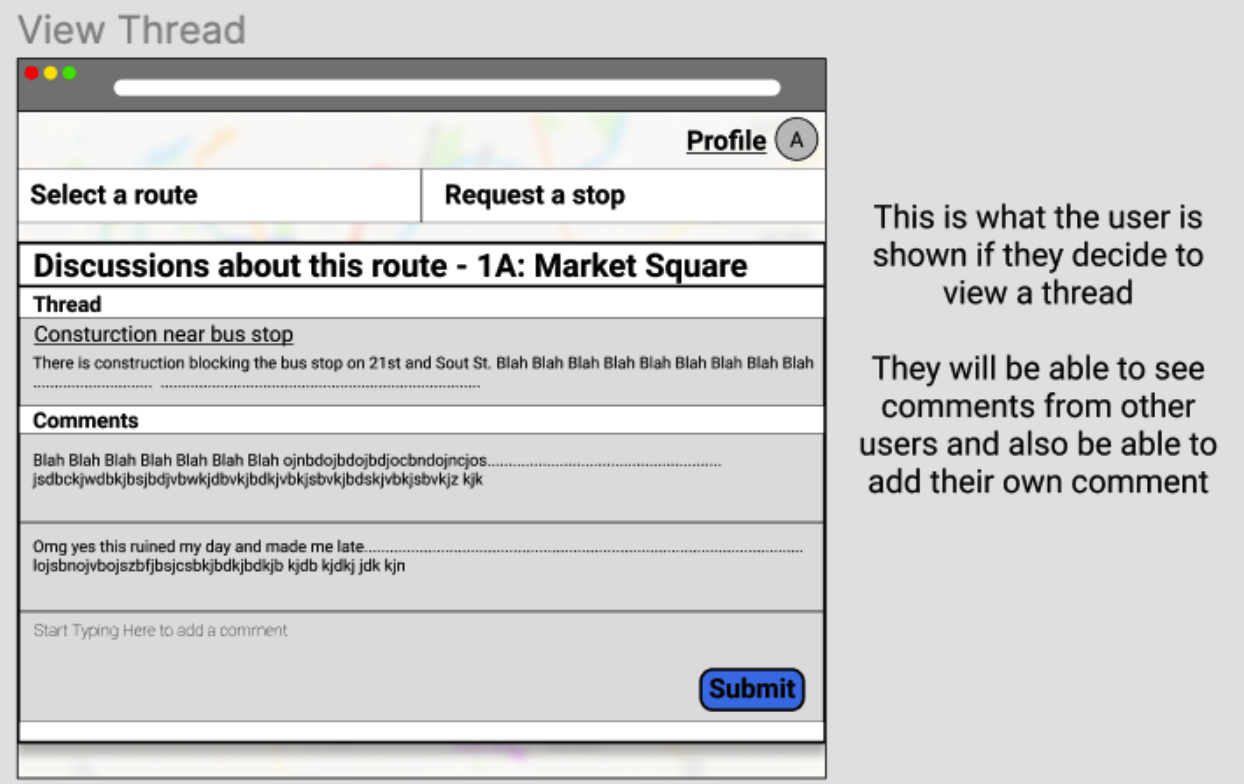
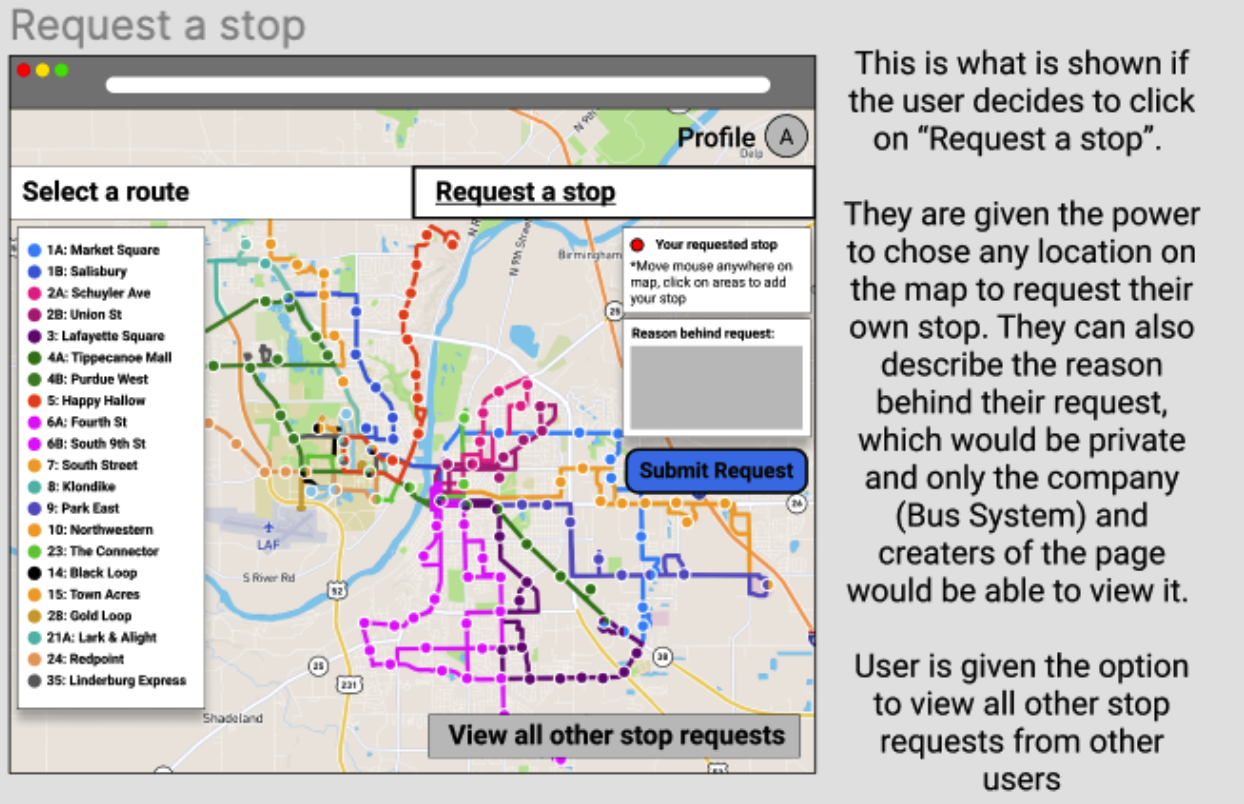
Final Prototype
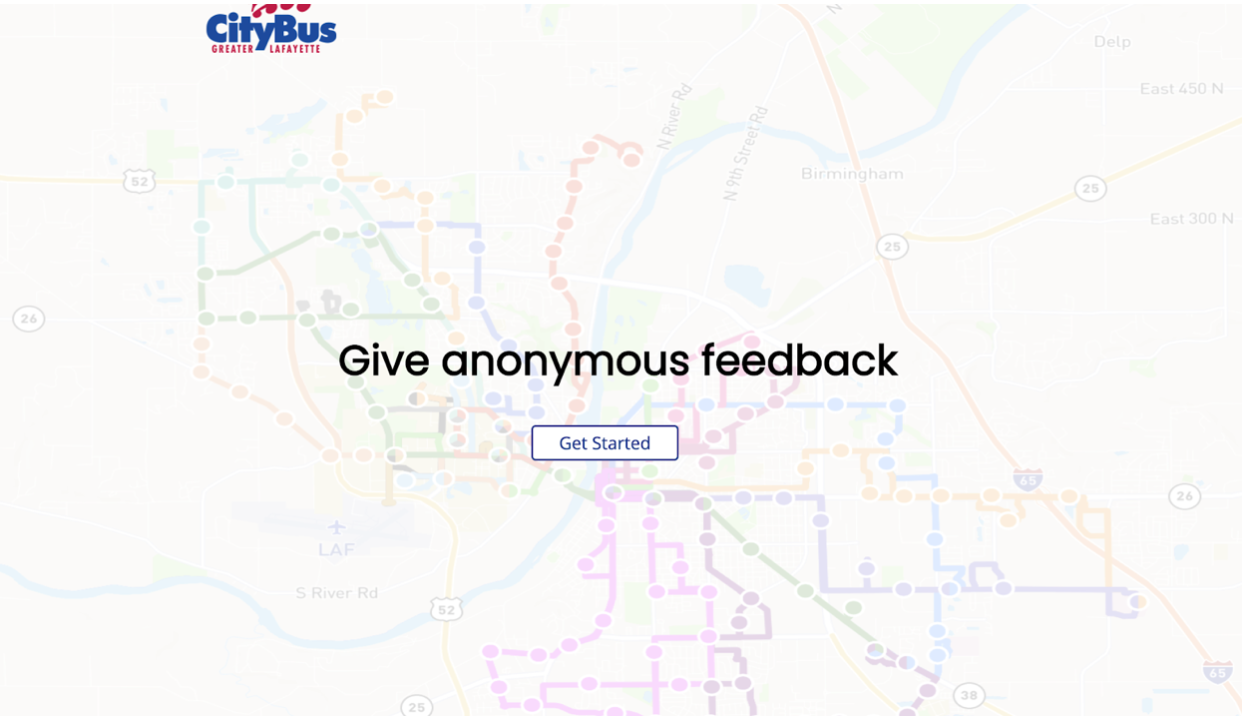
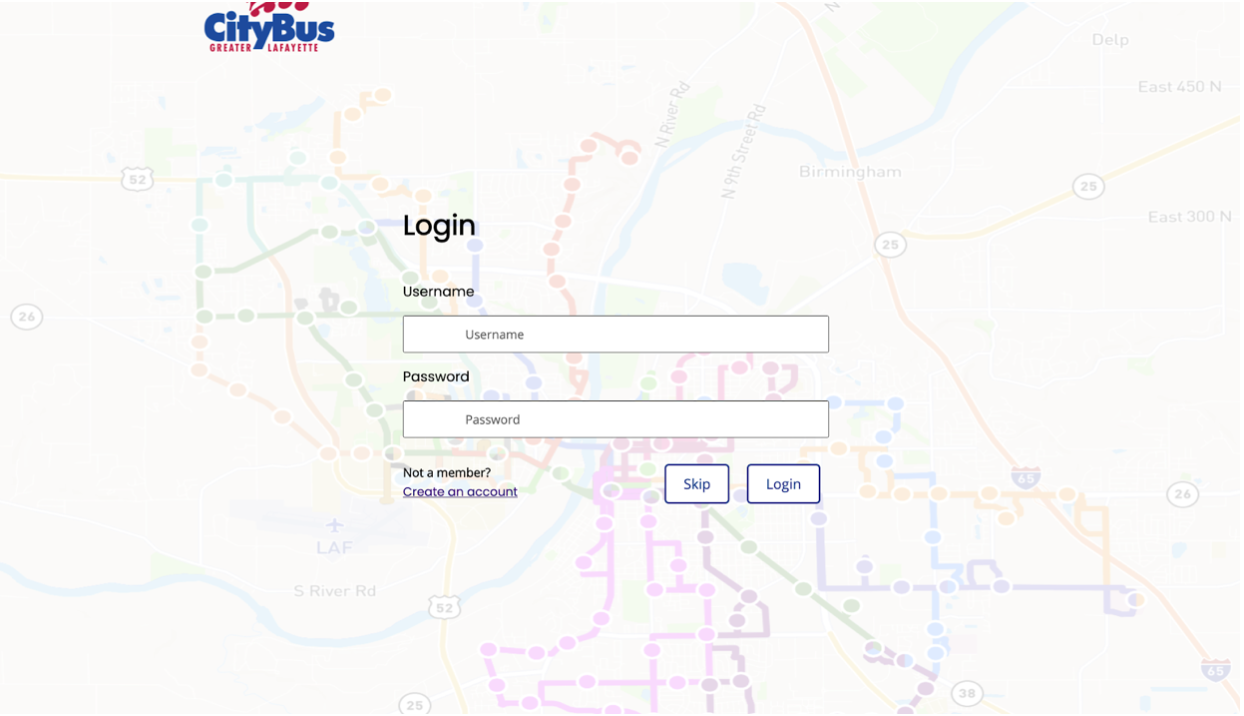
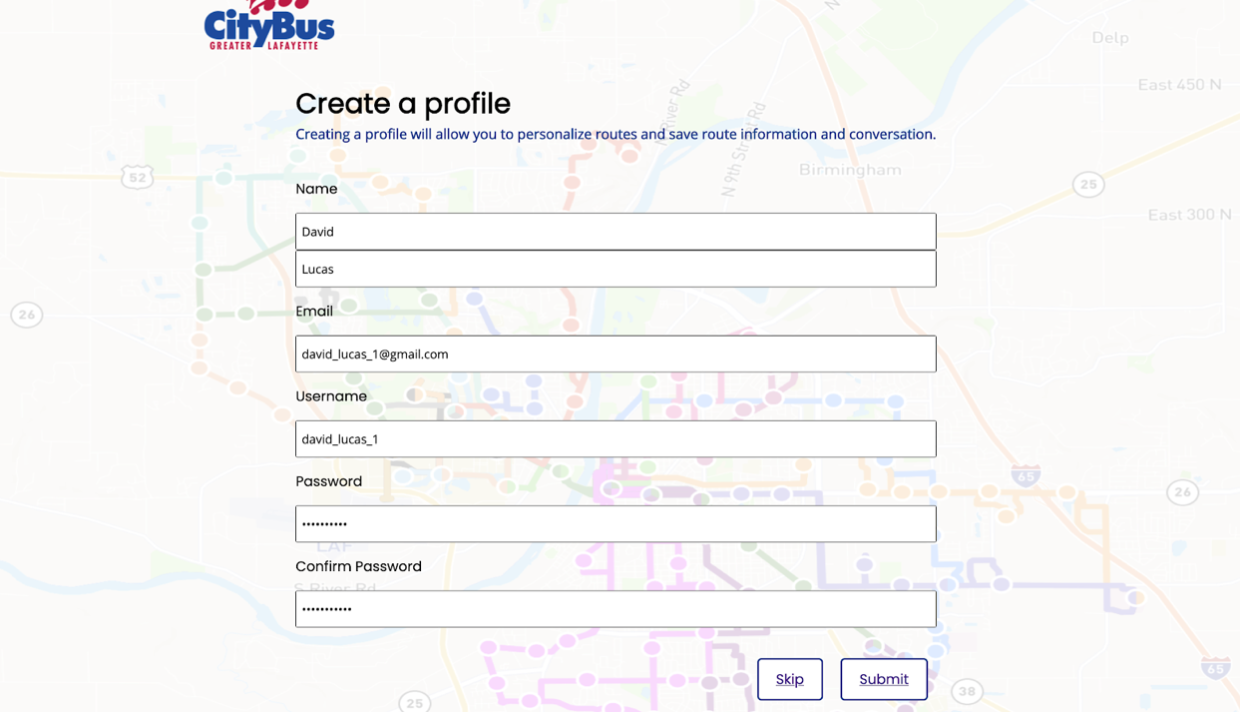
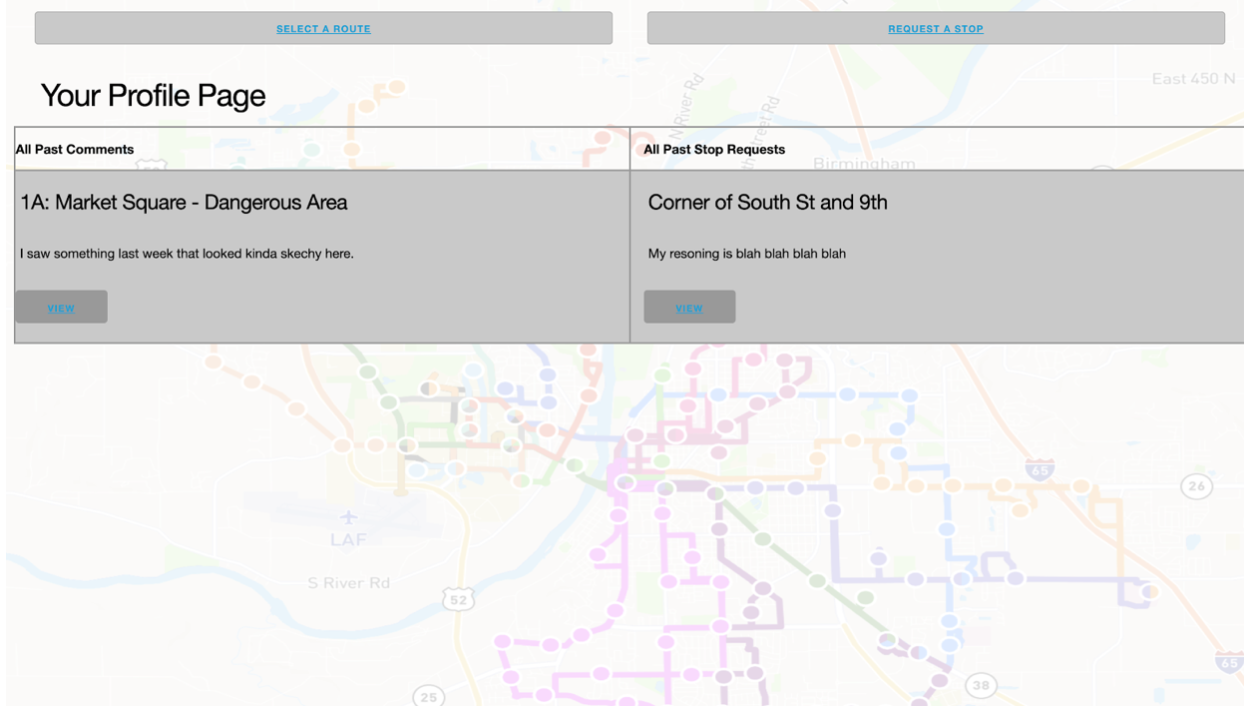
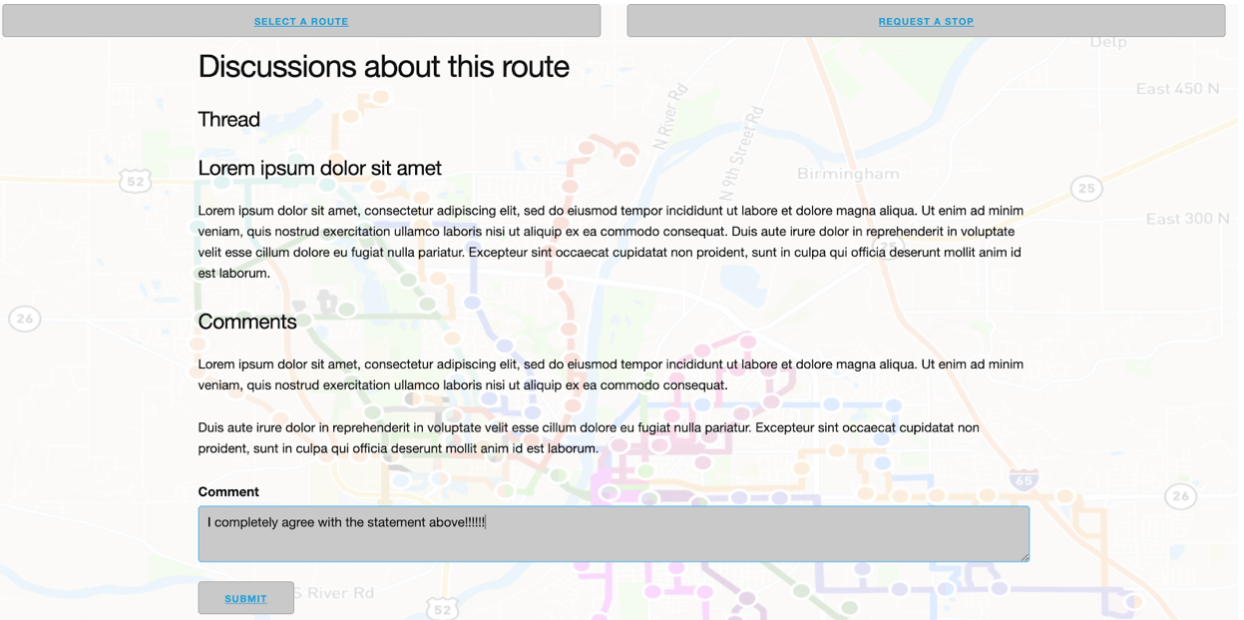
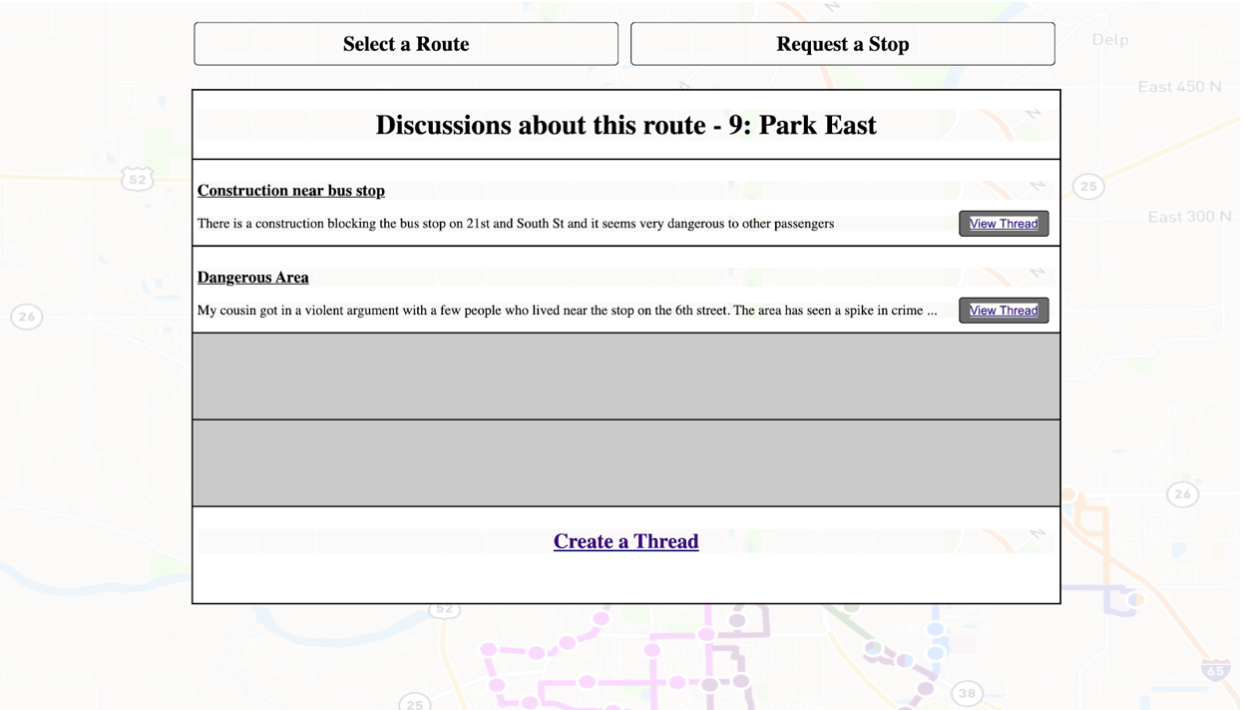
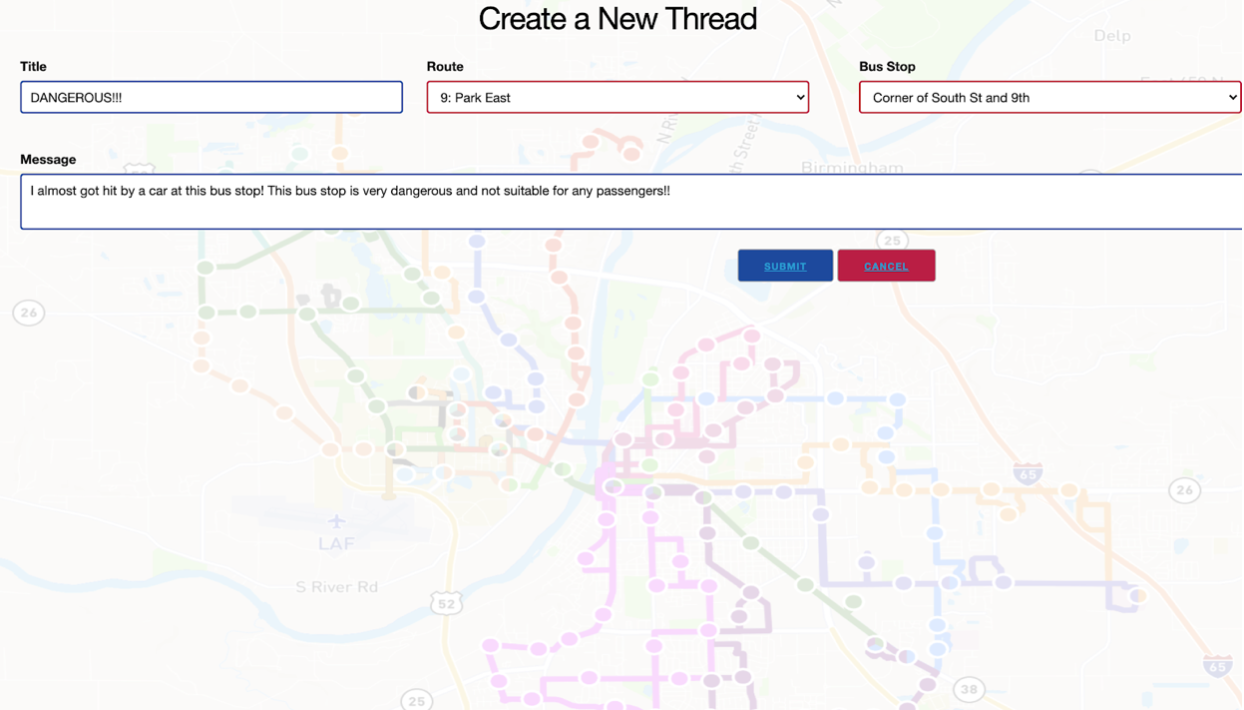
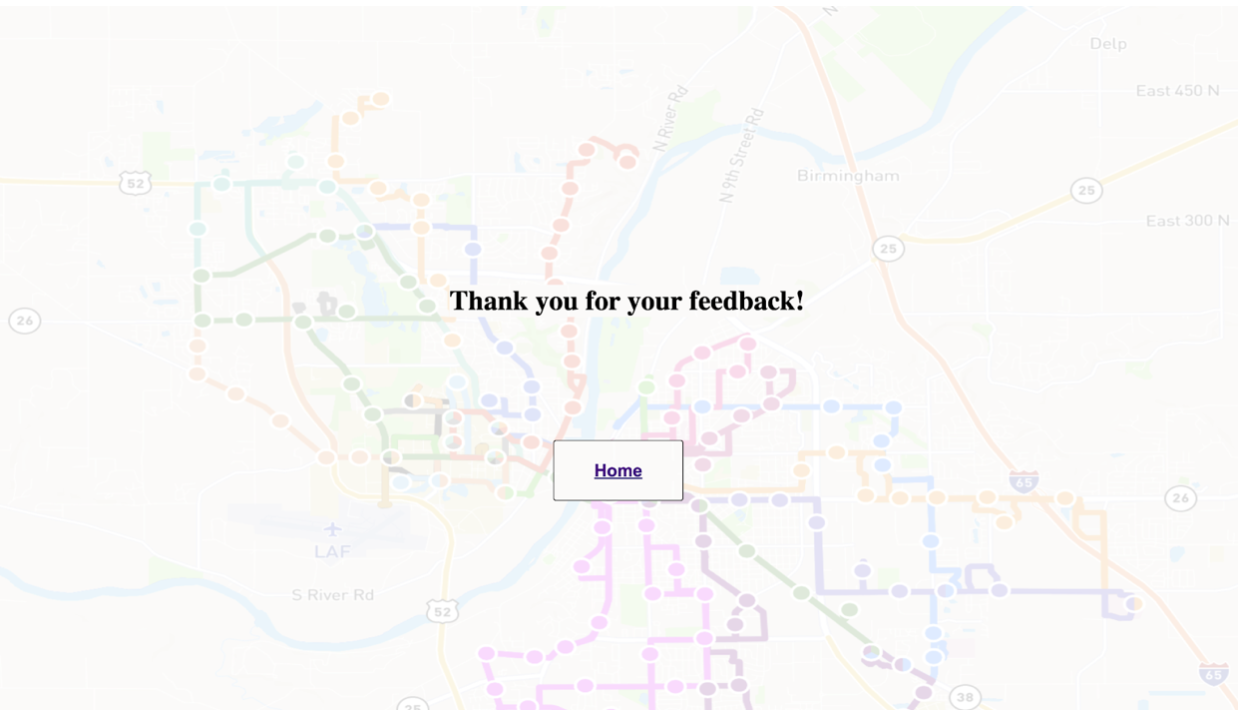
Using HTML, CSS, and JS we created a working website that allows users to start a discussion on a stop/route and request a stop. We applied feedback we gathered through testing our wireframes. We found from the testing that the creating a profile page needs to come first. Along with that, participants wanted to see all the routes before selecting a stop to comment about. We also changed our layout of the first screen: instead of having the list of items, we directly placed the login screen because participants mistook the goals listed on the first screen as hyperlinks.
Reflection
We started off on a wrong note by choosing a user group without doing much, if any, secondary research. We did secondary research to back up our user group rather than finding a user group that fit into our problem scopes from the secondary research. This proved to be a problem and caused us to have many internal conflicts as well as conflicts as a group.
Upon getting feedback from desk critique and learning that having a user group in more in need of empowerment, we took a large leap mid-project and changed our scope entirely. This was a bold move, and a scary one, but it paid off greatly. As a team, we loved being able to dive deeper into digital civics and explore the values and needs of disenfranchised individuals. In this case, more specifically those who do not have the privilege of having a means of transportation that travels directly to and from their workplace.
We were able to explore and define empowerment, public transportation systems, low income families, the working lower class, as well as many other spaces. We wished that we would have been able to empower the users more and allow for them to have representation in spaces beyond the one we created. This is a wonderful form of activism and something that none of us have previously explored and it was a privilege to work on this project. In the future, we all hope to have more opportunities to explore/work with digital civics and empowerment of those in need.
This was the first project that I felt very confident and complacent at the same time, as I was getting more comfortable with the overall process of UX Design. I believe this led to convincing myself to conduct the idea first then somehow mold the research to fit the idea. I have gained crucial knowledge and experience from this project.
When coding in groups, I have realized that creating a shared skeleton/frame is very important. I made so many unnecessary edits when putting the website together, and this extra steps could have easily been avoided by agreeing on a shared template of codes.
My Contribution
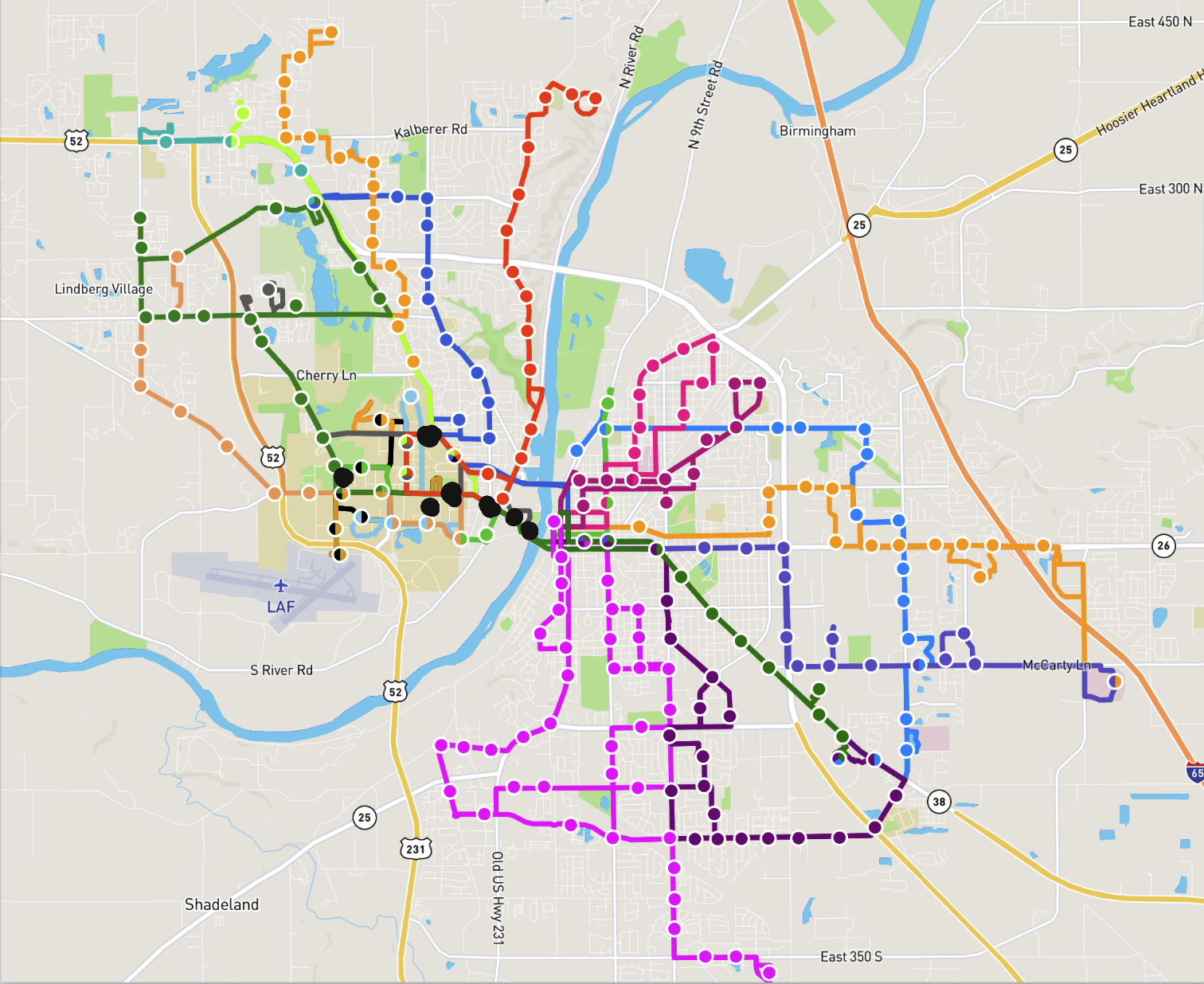
I have planned and led the map activity during the co-design session.
I communicated and caught up with teammates often to check how they were feeling/doing with the project.
I conducted interviews and testings that greatly contributed to our rescoping and iterations.
I championed the coding part of the final prototype, as I gathered every member’s codes and edited them to produce the final product. I also created a major portion of the website.
 James Chang's Portfolio