Our goal is to remind Lyft users to rate and to make the rating system faster so Lyft drivers can be rated more often for their driving to offset any unfair low ratings.
Create a replacement for the current five-star rating and review system that Lyft uses to track and reward drivers in their system
Interview
Goal
Contractor: Find out whether or not rating affected the way a driver found work & clear up any misconceptions we had about the rating system from a driver’s point of view
User: Find out the reason to why a user would not leave reviews after the ride & find out what can trigger users to review more often
Target interviewees
- Contractors who are in the Lyft or Lyft-like gig economy business
- Users who frequently use Lyft or Lyft-like services
Interview Takeaways
Contractor: Doesn’t mind the rating system. Contractor thinks it is necessary for drivers to be rated so bad ones get terminated. In the contractor’s point of view, people forget to rate because they turn off their phone, go about their business and switch off the app.
User: The user did not know about the automatic 5-star rating system and how anything below 4.7 average for a driver can jeopardize the status. The user then talked about how being knowledgeable about those facts would have made her rate her driver more often.
Research & Investigation
Investigations and researches were done to address the real problem behind the Lyft’s original rating system. We were able to find out about how Lyft provides automatic 5 star rating to the driver when the user does not review. We also found that anything below a 4.7 average can jeopardize the driver’s status.
Early Sketches
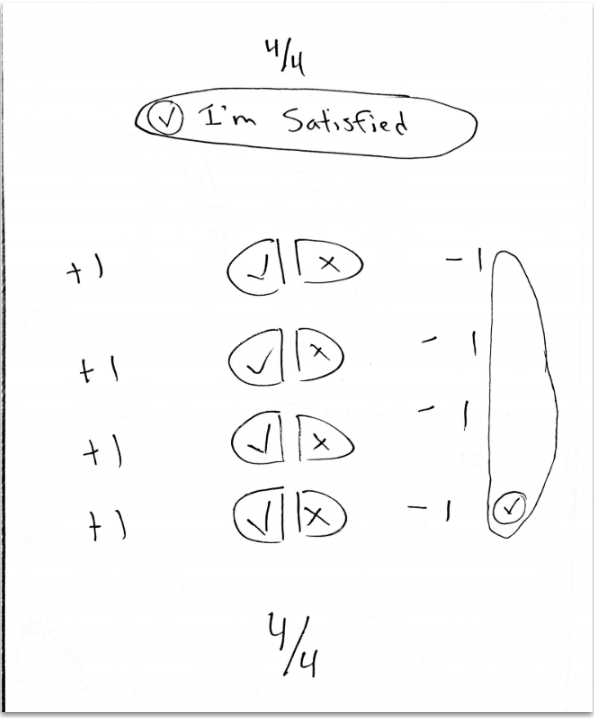
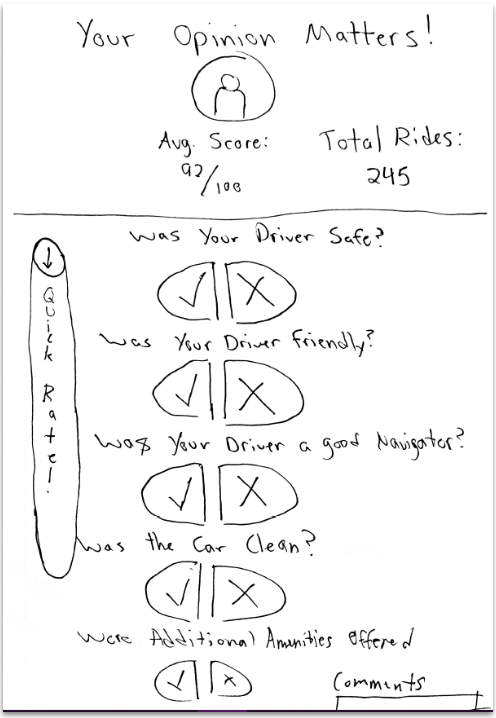
One thing we found out from interviews was that the users didn’t know the importance a rating has on a driver and that the driver sometimes gets unfair low ratings. These 4-5 star ratings are important for a driver to offset any bad ratings. We looked towards a clear-cut approach that would make it easier for riders to give definitive feedback in a timely manner.
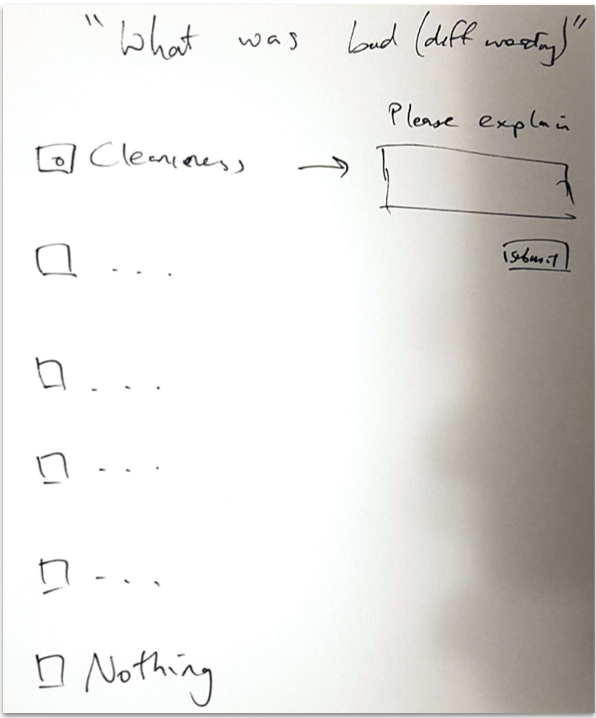
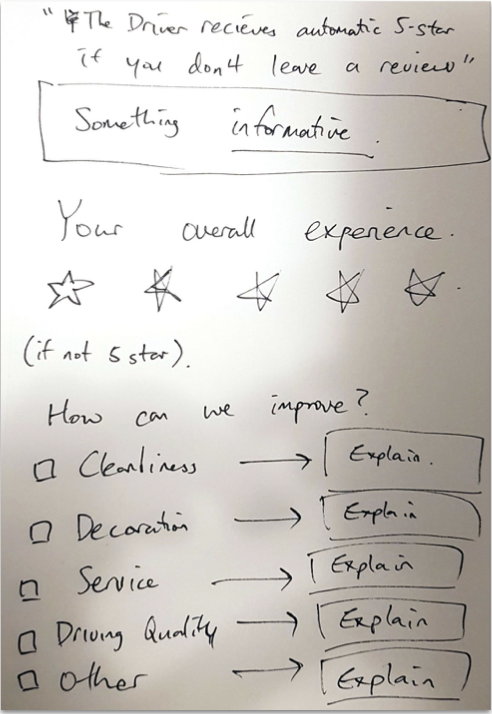
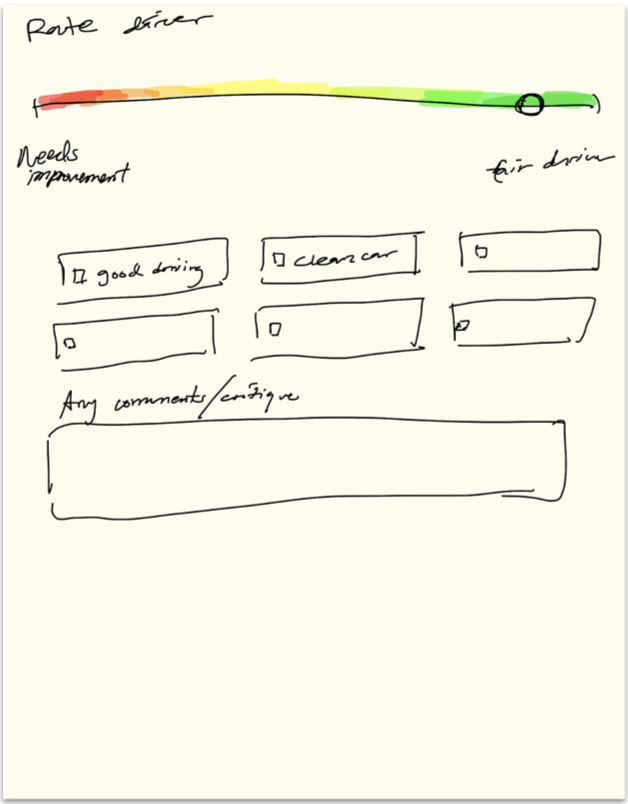
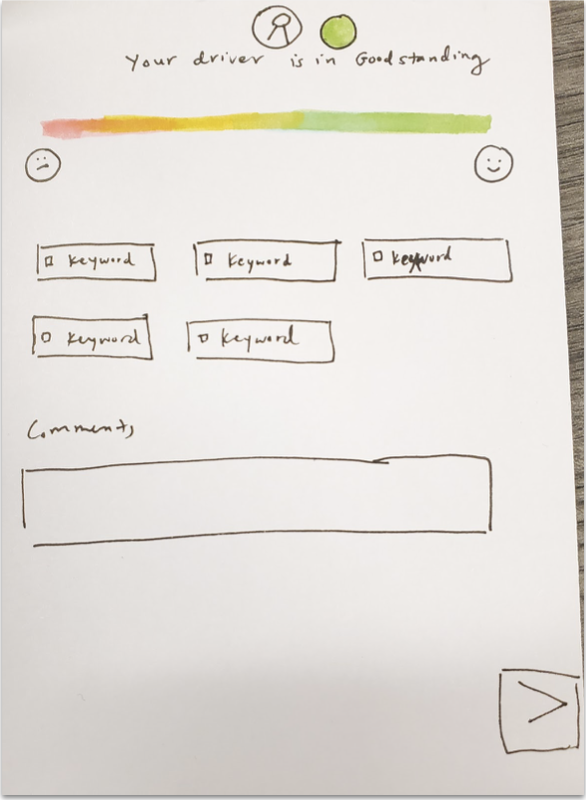
Franken-Sketch
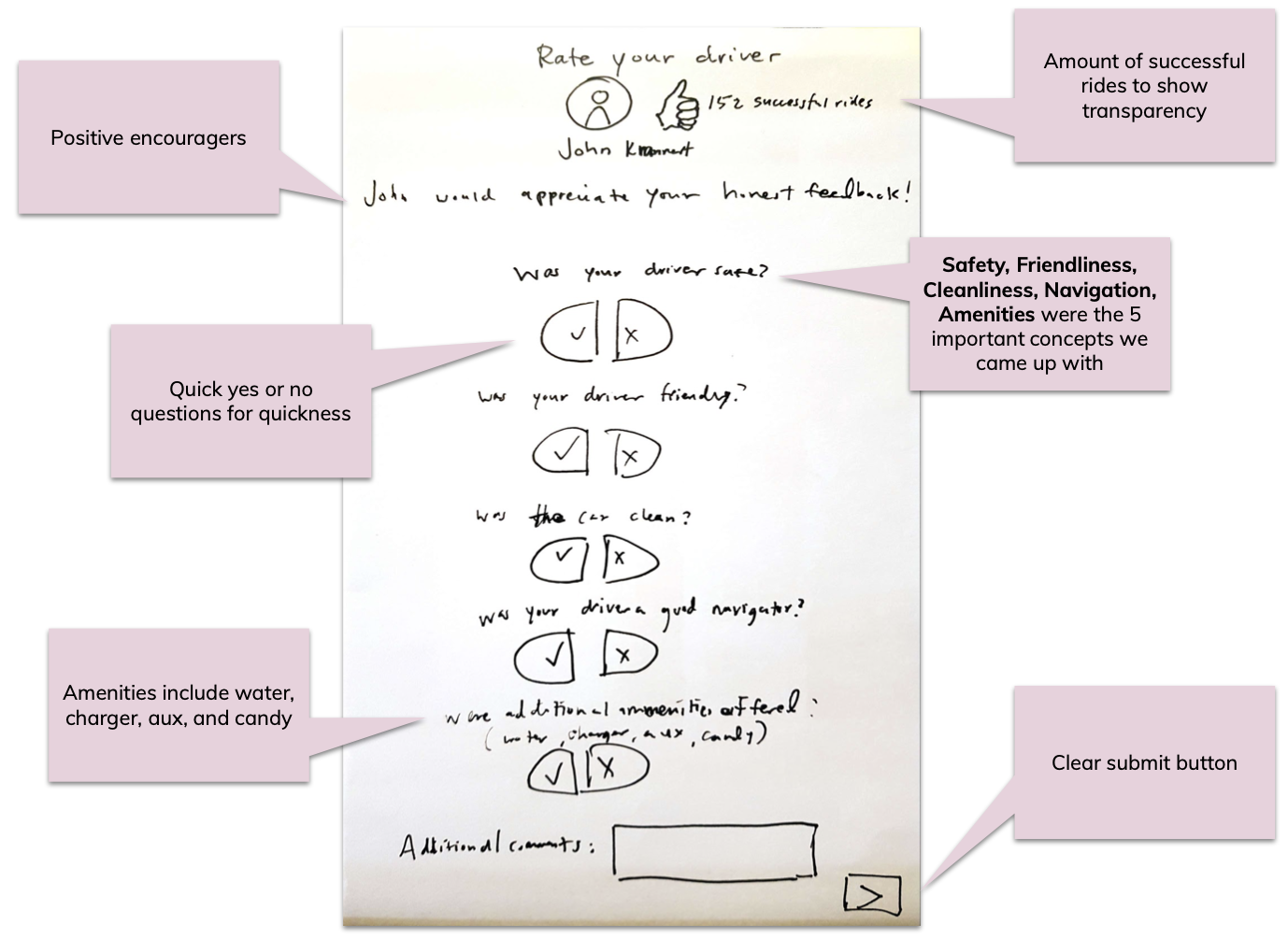
The team gathered all the initial early sketches and created a Franken-Sketch. A Franken-Sketch combines positive features of multiple initial sketches and mold it into one sketch.
Personas


Marc 35 | Male | Lyft driver
Marc is a 35 year old man driving for Lyft. He’s using Lyft as a way to supplement his job as a nighttime security guard at a small company. He wants to save up money to go back to college for another degree.
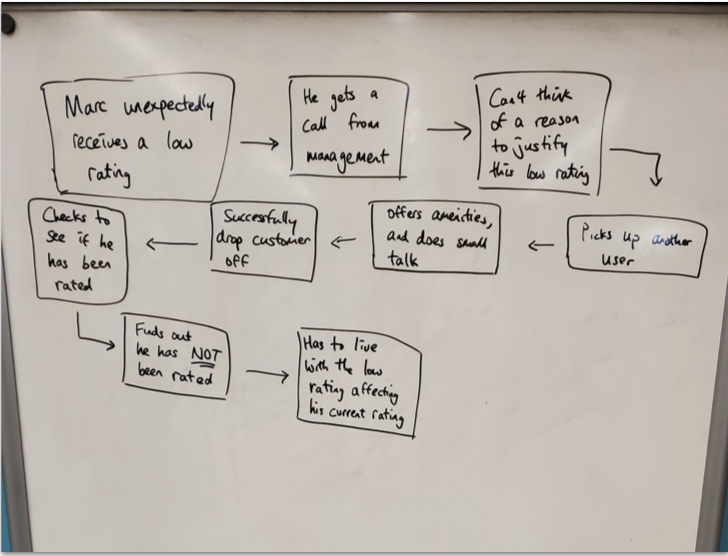
He needs a way for his drivers to remember to rate him so he can offset the balance of people that give him one-off unfair ratings for fun or on accident because management won’t get rid of those ratings until the next cycle. When he gets a call from management for a random low rating he can’t explain, he gets nervous thinking he’s just that much closer to being terminated.
Emily 18 | Female | Student
Emily is a student athlete who plays volleyball for Michigan State University, and she double majors in Aerospace Engineering and Economics. She often takes Lyft from her practice facility back home because she’s too exhausted to even walk one mile. The only thing she has on her mind is to go shower in hot water and lay in bed. During the ride, Emily and the driver exchanged some positive words and Emily was overall satisfied with the ride.
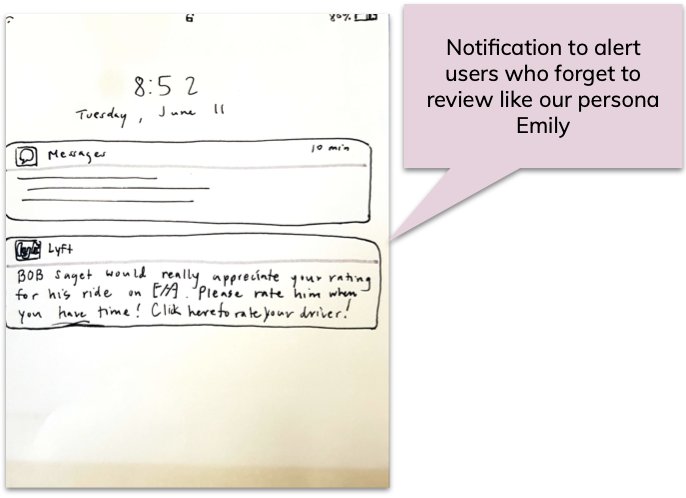
Emily is aware of the importance of rating to the drivers. However, in the heat of the moment, Emily has other things on her mind such as shower and sleep. She needs a little reminder to rate.
Scenarios
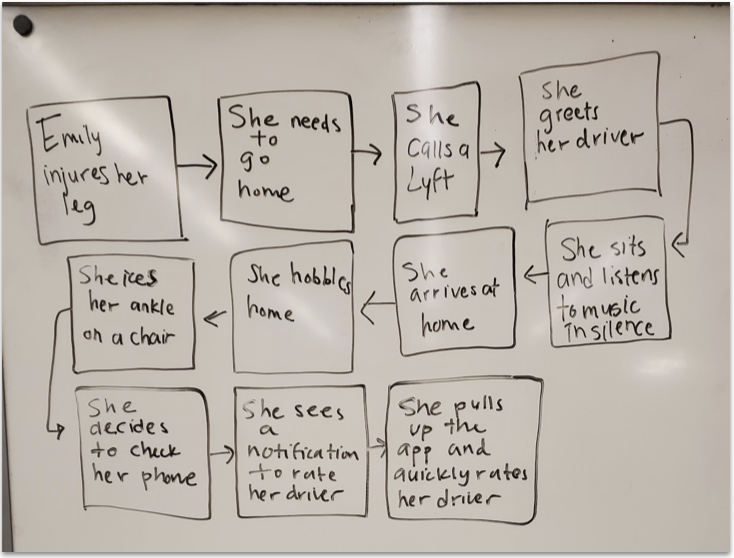
We created a scenario for both of our personas to really approach the problem from our persona’s perspective. The scenario resulted in deciding the narrow scope for our user: Lyft customers who forget to rate
Usability Testing
We had 4 questions we wanted answered going into usability testings.
1. Is the app straightforward?
2. Can the average score be kept as a number?
3. Can a user complete the review quickly?
4. Is the positive encourager effective?
Through usability testings, we were able to find strengths and weaknesses of our initial Franken-Sketch.
Strengths
– Knows exactly what the next step is
– Straightforward buttons
– Average score can be kept as a number
– Positive encouragers encourages users to participate
Negatives
– Incentives will make users participate more
– Takes too long
– Average score needs to show what it’s out of
Iteration
After taking back feedbacks from our usability testing, we made some iterations to our initial Fraken-Sketch.
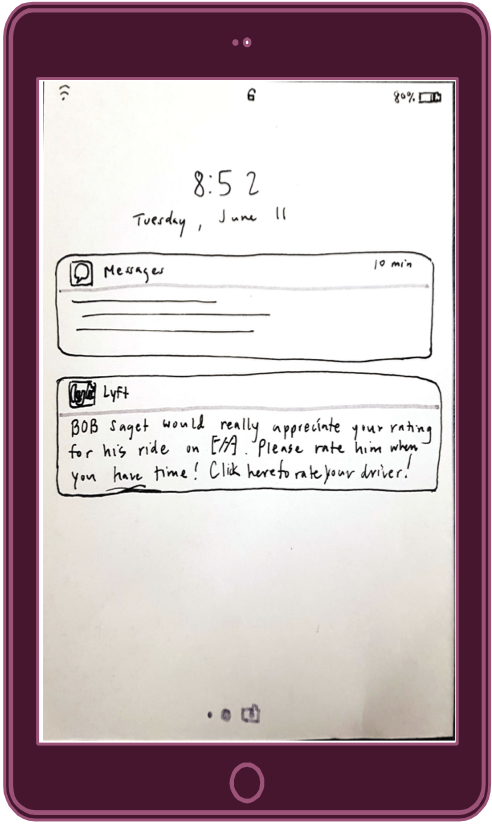
Notification page was added to implement the alert system for users who forget.
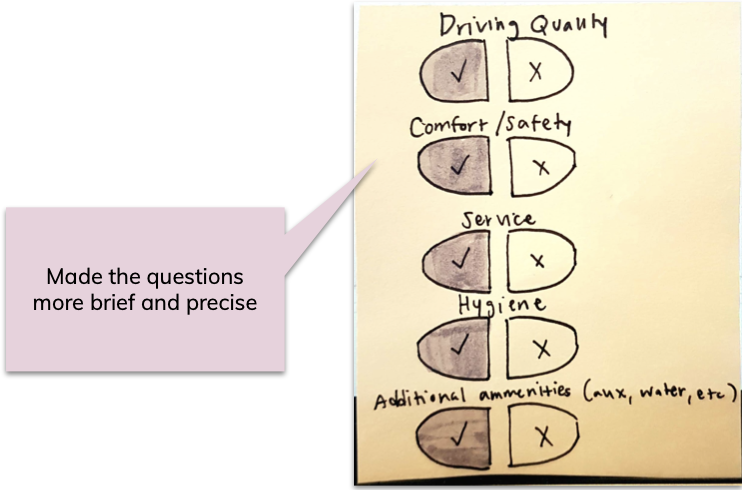
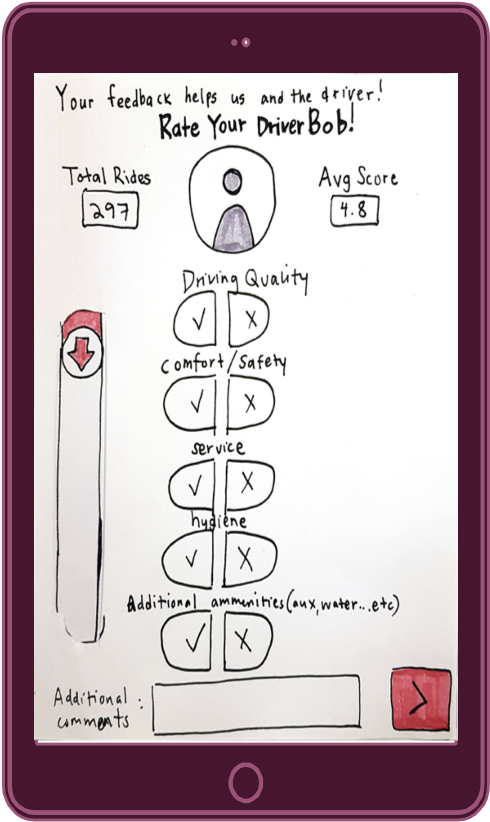
Descriptions of the buttons were shortened to fasten the pace of the review.
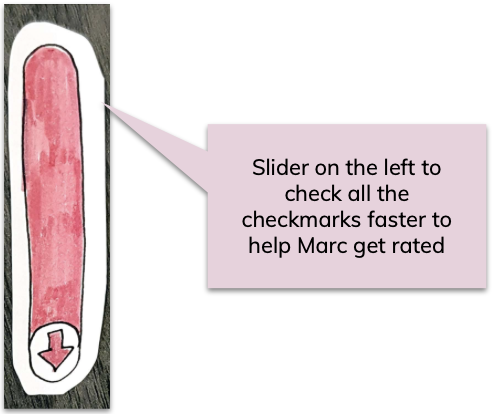
Slider on the left was added to also fasten the process. It serves as a way to check every box with just one slide.
Lastly, the thank you end page was added to appear more professional.
Final Design
The slide on the left definitely leaves a lot to be desired. It needs an explanation, and it is unknown how effective the function will be.
The rest of the prototype looks clean, and overall not too complicated. With the addition of the notification page, our user group: Customers who forget to rate, will be notified and give a more descriptive review than the one implemented by Lyft today.
Design Rationale
The design rationale behind our final prototype is to ultimately create a replacement for the current five-star rating and review system that Lyft uses. We believe we have created a review system that is not only ease of use, but also gives detailed feedback for the drivers. Through thorough interviews, we were able to come up with our personas and scenarios which eventually led to us finding our target user group.
Takeaways
- Need more research, interviews, and usability tests frequently throughout the process
- Connect research to interviews/personas/sketches
- Did not focus on how the review system can be used maliciously against drivers

